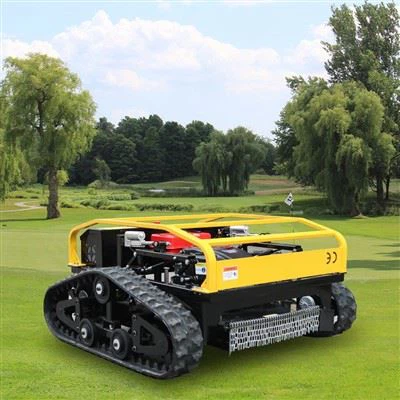
As a supplier of remote mowers, I've received numerous inquiries about how our products perform in wet grass conditions. This blog post aims to provide a comprehensive analysis of this topic, drawing on both scientific knowledge and practical experience.
Understanding the Challenges of Wet Grass
Wet grass presents several challenges that can affect the performance of a mower. Firstly, the moisture in the grass makes it heavier and more difficult to cut. The blades of the mower have to work harder to slice through the wet grass, which can put additional strain on the motor and reduce the cutting efficiency. Secondly, wet grass tends to clump together. When the mower cuts through the wet grass, the clumps can clog the cutting deck and the discharge chute, preventing the grass from being properly ejected. This can lead to uneven cutting and may even cause the mower to stall. Thirdly, the wet surface of the lawn can be slippery, which can affect the traction and maneuverability of the mower. A mower that loses traction may not be able to move smoothly across the lawn, resulting in an uneven cut and potentially causing damage to the lawn.
How Our Remote Mowers Are Designed to Handle Wet Grass
Our remote mowers are specifically designed to address the challenges posed by wet grass. One of the key features of our mowers is their powerful motors. These motors are capable of generating sufficient torque to cut through wet, heavy grass with ease. The high - speed rotation of the blades ensures a clean and efficient cut, even in challenging conditions.
In addition, our mowers are equipped with a well - designed cutting deck. The shape and size of the cutting deck are optimized to prevent grass clumps from clogging. The discharge chute is also designed to allow for smooth ejection of the cut grass. Some of our models even have a self - cleaning function for the cutting deck, which helps to keep it clear of debris and ensure consistent performance.
When it comes to traction, our remote mowers are fitted with high - quality wheels and tires. These are designed to provide excellent grip on wet surfaces. The tread pattern on the tires helps to channel water away from the contact area, reducing the risk of slipping. This allows the mower to move smoothly and evenly across the wet lawn, ensuring a uniform cut.
A Case Study: Testing Our Remote Mower in Wet Grass
To demonstrate the performance of our remote mowers in wet grass conditions, we conducted a series of tests on a large, uneven lawn. The lawn had been recently watered, simulating heavy dew or light rain conditions.
We used our Remote Control Rotary Lawn Mower Automatic Robot Lawnmower for the test. The mower was operated remotely, allowing us to control its speed, direction, and cutting height with precision.
During the test, we found that the mower was able to cut through the wet grass without any significant issues. The powerful motor maintained a consistent cutting speed, and the blades made clean cuts through the heavy, wet grass. There was minimal clogging of the cutting deck, and the cut grass was ejected smoothly through the discharge chute.
In terms of traction, the mower moved steadily across the wet lawn. The wheels provided good grip, and we were able to maneuver the mower around obstacles and along the edges of the lawn without any problems. The end result was a well - manicured lawn with an even cut, despite the challenging wet grass conditions.
Comparing with Other Types of Mowers
When compared to traditional push mowers or Robotic Lawn Mower in wet grass conditions, our remote mowers have several advantages.
Traditional push mowers often struggle in wet grass. The operator has to exert more force to push the mower through the heavy grass, and the risk of clogging is much higher. In addition, the operator may slip on the wet surface, posing a safety hazard.
Robotic lawn mowers, while convenient, may not be as effective in wet grass. Some robotic mowers are not designed to handle the extra weight and density of wet grass, and they may get stuck or have difficulty maintaining a consistent cutting pattern. Our remote mowers, on the other hand, offer the flexibility of remote control, allowing the operator to adjust the mower's operation according to the specific conditions of the lawn.


Maintenance Tips for Using Remote Mowers in Wet Grass
To ensure the long - term performance of our remote mowers when used in wet grass, proper maintenance is essential. After each use in wet conditions, it is important to clean the mower thoroughly. This includes removing any grass clumps from the cutting deck, blades, and discharge chute. The wheels and tires should also be cleaned to remove any mud or debris.
It is also recommended to check the motor and electrical components for any signs of moisture damage. If necessary, dry the mower in a well - ventilated area before storing it. Regularly lubricating the moving parts of the mower can also help to prevent rust and corrosion, which can be accelerated by exposure to moisture.
Conclusion
In conclusion, our remote mowers are well - equipped to handle wet grass conditions. Their powerful motors, efficient cutting decks, and excellent traction systems ensure a clean, even cut, even in the most challenging situations. Whether you are a professional landscaper or a homeowner with a large lawn, our Remote Control Mower can provide reliable performance in wet grass.
If you are interested in learning more about our remote mowers or would like to discuss your specific lawn - mowing needs, we encourage you to reach out to us. Our team of experts is ready to assist you in finding the perfect mower for your requirements.
References
- "Lawn Mower Technology and Performance in Different Conditions" - Journal of Agricultural Engineering
- "The Impact of Grass Moisture on Mower Efficiency" - International Journal of Horticultural Science