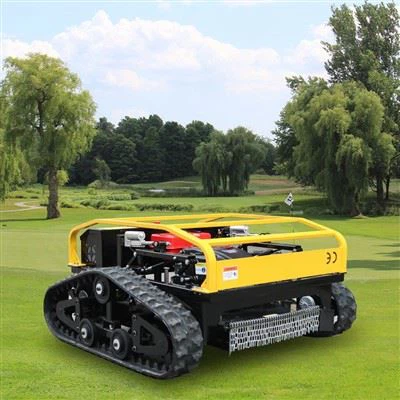
Remote mowers have revolutionized the way we approach lawn care, offering convenience, efficiency, and enhanced safety. As a supplier of remote mowers, I often get asked about the types of blades these machines use. In this blog post, I'll explore the different kinds of blades available for remote mowers, their features, benefits, and how they can impact your lawn care experience.
Rotary Blades
Rotary blades are the most common type of blades used in remote mowers. These blades rotate horizontally at high speeds, typically between 2,500 to 3,500 RPM (revolutions per minute). The high - speed rotation allows the blades to cut through grass efficiently.
Design and Function
Rotary blades are usually flat and have a sharp edge. They are attached to a central spindle that is connected to the mower's engine or motor. As the spindle rotates, the blades move in a circular motion, creating a cutting swath. The design of rotary blades is simple yet effective, making them suitable for a wide range of grass types and lengths.


Benefits
- Versatility: Rotary blades can handle different grass conditions, from short, manicured lawns to longer, overgrown grass. They can also cut through light debris, such as leaves and small twigs, without getting clogged easily.
- Cost - effective: They are relatively inexpensive to manufacture and replace, making them an economical choice for both residential and commercial users.
- Smoothing: When properly maintained, rotary blades can provide a smooth and even cut, leaving your lawn looking well - groomed.
Limitations
- Not Ideal for Precision Cutting: Rotary blades may not be the best choice for areas that require precise trimming, such as around flower beds or along edges. The wide rotation of the blades can make it difficult to get a clean, sharp cut in tight spaces.
- Fading on Tough Grasses: If the grass is very thick or tough, the rotary blades may struggle to cut through it evenly, resulting in a ragged or uneven cut.
Reel Blades
Reel blades, also known as cylinder blades, are another option for remote mowers. These blades consist of multiple spiral - shaped blades that rotate around a horizontal axis. The blades interact with a fixed, bottom blade (bedknife) to create a scissor - like cutting action.
Design and Function
The reel blades are arranged in a cylinder, with the number of blades varying depending on the mower model. As the reel rotates, the blades pass over the bedknife, slicing the grass cleanly. Reel mowers typically operate at a lower RPM compared to rotary mowers, usually between 1,500 to 2,000 RPM.
Benefits
- Precision Cutting: Reel blades are excellent for achieving a precise and clean cut, especially in areas that require detailed trimming. They can cut grass very close to the ground, making them ideal for golf courses, sports fields, and other areas where a manicured look is desired.
- Healthy for Grass: The scissor - like cutting action of reel blades causes less damage to the grass blades compared to rotary blades. This results in a healthier, greener lawn with less risk of disease and browning.
- Quiet Operation: Reel mowers generally operate more quietly than rotary mowers, which can be an advantage if you are mowing in a noise - sensitive environment.
Limitations
- Higher Cost: Reel blades and the mowers that use them are often more expensive than rotary mowers. The complex design and precision manufacturing of reel blades contribute to the higher cost.
- Limited Grass Length: Reel mowers are best suited for shorter grass. They may struggle to cut through tall or thick grass, and trying to do so can put excessive strain on the mower's engine and blades.
Flail Blades
Flail blades are less common in remote mowers but are still used in certain applications. These blades are small, rectangular pieces of metal that are attached to a rotor by chains or hinges. As the rotor spins, the flail blades swing freely, providing a powerful cutting action.
Design and Function
Flail blades are designed to be tough and durable. The swinging motion of the blades allows them to cut through thick vegetation, including weeds, brush, and tall grass. The flail blades are also very effective at mulching, as they can break up the cut grass and debris into small pieces.
Benefits
- Heavy - Duty Cutting: Flail blades are ideal for heavy - duty lawn care tasks, such as clearing overgrown fields or managing rough terrain. They can handle tough, fibrous vegetation that other types of blades may struggle with.
- Mulching Capability: The mulching feature of flail blades is a significant advantage. By mulching the cut grass and debris, it can be returned to the soil as nutrients, improving the health of the lawn.
- Safety: The free - swinging design of flail blades reduces the risk of kickback, making them a safer option in certain situations.
Limitations
- Higher Maintenance: Flail blades require more maintenance than rotary or reel blades. The chains or hinges that attach the blades to the rotor need to be inspected and replaced regularly to ensure proper operation.
- Louder Operation: Flail mowers tend to be louder than other types of mowers, which can be a drawback in residential areas.
Choosing the Right Blades for Your Remote Mower
When selecting the blades for your remote mower, several factors need to be considered:
Lawn Type and Condition
- If you have a small, well - maintained lawn, rotary blades may be sufficient. They are cost - effective and can handle most residential lawns.
- For large, commercial lawns or areas that require a more precise cut, such as sports fields or golf courses, reel blades are a better choice.
- If you have a lot of overgrown grass, weeds, or rough terrain, flail blades may be the most suitable option for heavy - duty cutting.
Mower Model
Different remote mowers are designed to work with specific types of blades. Make sure to check your mower's manual or consult with the manufacturer to determine the compatible blade types.
Budget
The cost of the blades and the associated maintenance should also be taken into account. Rotary blades are the most affordable, while reel blades and flail blades tend to be more expensive.
As a remote mower supplier, we offer a wide range of remote mowers suitable for different needs and budgets. You can explore our Remote Control Lawn Mower With Tracks, Self Propelled Garden Remote Control Lawn Mower, and Remote Control Mower options to find the perfect match for your lawn care requirements.
If you're interested in purchasing high - quality remote mowers or have any questions about the blade types and their suitability for your needs, we encourage you to contact us for a procurement discussion. We're here to help you make an informed decision and ensure that you get the best value for your money.
References
- "Lawn Mower Blades: A Comprehensive Guide." Gardening Today Magazine.
- "The Science of Lawn Care: Blade Selection and Performance." Journal of Horticultural Science.
- Manufacturer's manuals for various remote mower models.