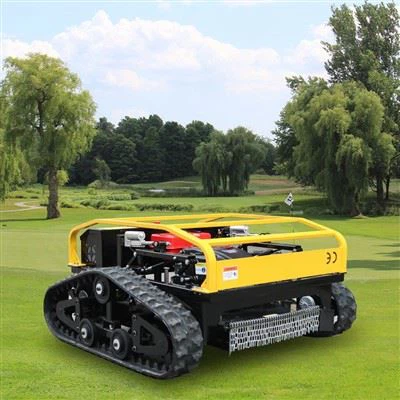
What is the fuel consumption of a gasoline - powered remote mower? Let's dig into this topic right away. As a Remote Mower supplier, I've had my fair share of customers asking about this very thing.
First off, we need to understand what a Remote Mower actually is. A remote mower is a great piece of machinery that allows you to cut grass from a distance. It's super useful, especially for large lawns or areas that are hard to reach. It gives you more flexibility and control compared to traditional mowers.
Now, onto the fuel consumption. The fuel consumption of a gasoline - powered remote mower can vary quite a bit. There are several factors that play a part in determining how much fuel it'll use.


Factors Affecting Fuel Consumption
1. Engine Size
The size of the engine is a major factor. Just like a car, a bigger engine in a remote mower will generally use more fuel. Smaller gasoline - powered remote mowers usually have engines in the range of 3 - 5 horsepower. These are great for small to medium - sized lawns and won't guzzle fuel like their larger counterparts. On the other hand, larger remote mowers with 8 - 10 horsepower engines are designed for commercial use or large estates. They can cover more ground quickly, but they also burn through fuel at a faster rate.
2. Terrain
The type of terrain you're mowing also matters a lot. If you're mowing on flat, even ground, the mower doesn't have to work as hard. This means it'll use less fuel. But if you're dealing with hilly or uneven terrain, the mower's engine has to work harder to keep moving and cutting the grass. For example, mowing on a steep slope requires the engine to generate more power to climb, which in turn increases fuel consumption.
3. Grass Type and Height
The kind of grass you're mowing and its height can affect fuel usage too. Thick, tough grass like Bermuda grass or tall, overgrown grass will put more strain on the mower's blades and engine. The engine has to work harder to cut through the tough or tall grass, leading to higher fuel consumption. On the contrary, mowing short, fine grass like Kentucky bluegrass is much easier on the engine and thus uses less fuel.
4. Mowing Speed
How fast you operate the remote mower also impacts fuel consumption. Running the mower at a high speed means the engine is working faster, which uses more fuel. If you slow down and mow at a more moderate pace, the engine doesn't have to work as hard, and you'll save on fuel. It's a bit like driving a car; accelerating and going at high speeds burns more gas.
Getting an Estimate
On average, a small - to - medium gasoline - powered Remote Control Mower with a 3 - 5 horsepower engine might use around 0.2 to 0.5 gallons of gasoline per hour of continuous mowing on flat, well - maintained grass. However, if you're dealing with challenging terrain or thick grass, this number can easily go up to 0.8 gallons per hour or more.
For larger commercial - grade remote mowers with 8 - 10 horsepower engines, the fuel consumption can range from 1 to 2 gallons per hour, especially when used on large, uneven areas with difficult - to - cut grass.
Comparing to Other Types of Mowers
Let's compare gasoline - powered remote mowers with Robotic Lawn Mower. Robotic lawn mowers are powered by electricity, either from a battery or a direct power source. They're generally more energy - efficient and have lower "fuel" costs in the long run. However, they have limitations in terms of the area they can cover and the types of terrain they can handle.
Gasoline - powered remote mowers, on the other hand, offer more power and can cover larger areas and handle tougher terrain. They're a great option for commercial users or those with large, challenging lawns, even though the fuel costs can be higher.
Tips to Reduce Fuel Consumption
If you're looking to reduce the fuel consumption of your gasoline - powered remote mower, here are some tips:
- Keep the Engine Tuned: Regular maintenance is key. Make sure the engine is tuned up, the air filter is clean, and the spark plug is in good condition. A well - maintained engine runs more efficiently and uses less fuel.
- Adjust Your Mowing Strategy: If possible, mow the flat areas first and save the hilly or tough parts for later. This way, you start with the easier mowing and don't over - work the engine right from the start.
- Choose the Right Blade: A sharp blade cuts through grass more easily, reducing the strain on the engine. Dull blades force the engine to work harder and burn more fuel.
- Limit High - Speed Mowing: As mentioned earlier, slow down and mow at a moderate pace. You'll not only use less fuel but also get a better - looking lawn.
In Conclusion
So, the fuel consumption of a gasoline - powered remote mower depends on multiple factors such as engine size, terrain, grass type, and mowing speed. While it may use more fuel compared to robotic lawn mowers, it offers greater power and flexibility, making it a great choice for many users.
If you're in the market for a remote mower and want to learn more about fuel consumption or other aspects of our products, don't hesitate to reach out. We're here to answer all your questions and help you make the best choice for your lawn - mowing needs. Whether you have a small backyard or a large commercial property, we've got the right remote mower for you. Start the conversation and let's find the perfect solution together.
References
- Lawn & Garden Equipment Handbook
- Equipment Manufacturers' Specifications and Guidelines