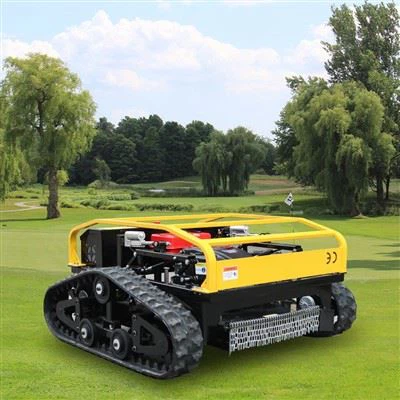
As a supplier of remote mowers, I've received numerous inquiries from customers about the performance of these machines under various environmental conditions. One question that frequently comes up is whether remote mowers are affected by strong winds. In this blog post, I'll delve into this topic, drawing on scientific principles and real - world experience to provide a comprehensive answer.


Understanding the Basics of Remote Mowers
Before discussing the impact of strong winds, it's essential to understand how remote mowers operate. Remote mowers, such as the Remote Grass Mower, Remote Control Grass Cutter, and Self Propelled Garden Remote Control Lawn Mower, are designed to be controlled from a distance. They typically have a set of wheels or tracks for mobility and a cutting mechanism for grass removal. These mowers rely on a stable power source, often a battery or a small engine, and a communication system to receive commands from the operator.
Aerodynamic Forces at Play
When a strong wind blows, it exerts aerodynamic forces on the remote mower. These forces can be divided into two main types: drag and lift.
Drag is the force that opposes the motion of the mower. As the wind blows against the mower, it creates a resistance that the mower's propulsion system has to overcome. The magnitude of the drag force depends on several factors, including the wind speed, the shape and size of the mower, and the surface area exposed to the wind. A mower with a large, flat surface area will experience more drag than a more streamlined one.
Lift is the upward force that can potentially cause the mower to become unstable. If the wind blows with enough force and at the right angle, it can create a lifting effect on the mower. This is particularly a concern for mowers with a high center of gravity or those that are not well - weighted.
Impact on Mobility
One of the most significant ways strong winds affect remote mowers is their mobility. The drag force can slow down the mower, making it difficult to maintain a consistent speed. This can lead to uneven cutting, as the mower may move more slowly in areas where the wind is stronger. In extreme cases, the wind may even be strong enough to stop the mower completely, preventing it from reaching certain parts of the lawn.
The lift force can also cause problems with mobility. If the mower becomes unstable due to the lifting effect, it may tip over or lose traction. This is especially dangerous on slopes or uneven terrain, where a tipped - over mower can cause damage to the machine and potentially pose a safety hazard.
Effects on Cutting Performance
In addition to mobility issues, strong winds can also impact the cutting performance of remote mowers. The wind can blow the grass in different directions, making it more difficult for the cutting blades to make clean cuts. This can result in a ragged and uneven lawn appearance.
Moreover, the wind may carry debris, such as leaves and twigs, which can get caught in the cutting mechanism. This not only affects the cutting quality but can also cause damage to the blades and other components of the mower.
Case Studies and Real - World Examples
To illustrate the impact of strong winds on remote mowers, let's look at some real - world examples. In a recent project in a coastal area, our customers reported that the Remote Control Grass Cutter they were using had difficulty operating during a storm. The strong winds caused the mower to move erratically, and the cutting quality was severely compromised. After analyzing the situation, we found that the mower's large, boxy shape was contributing to the high drag and lift forces.
In another case, a customer in a mountainous region used a Self Propelled Garden Remote Control Lawn Mower on a windy day. The mower struggled to climb slopes due to the increased drag, and on one occasion, it tipped over on a particularly steep incline. This incident highlighted the importance of considering the wind conditions and the terrain when using remote mowers.
Mitigating the Effects of Strong Winds
While strong winds can pose challenges for remote mowers, there are several strategies that can be employed to mitigate their effects.
Firstly, choosing the right mower for the environment is crucial. Mowers with a low center of gravity and a streamlined design are less likely to be affected by lift and drag forces. Additionally, mowers with a powerful propulsion system can better overcome the resistance caused by the wind.
Secondly, operators can adjust their mowing techniques. For example, they can mow in the direction of the wind to reduce the drag force. They can also slow down the mower's speed to maintain better control and ensure more even cutting.
Finally, it may be necessary to wait for the wind to subside before operating the mower. If the wind speed is too high, it's simply not safe or practical to use the mower.
Communication and Safety
Another aspect to consider is the impact of strong winds on the communication system between the operator and the mower. Strong winds can interfere with the radio signals used for remote control, causing the mower to lose connection or receive incorrect commands. This can be a serious safety issue, as the operator may not be able to control the mower effectively.
To address this problem, it's important to use a reliable communication system with a strong signal strength. Some modern remote mowers are equipped with advanced communication technologies that are more resistant to interference. Additionally, operators should always keep a close eye on the mower and be prepared to take manual control if the communication is disrupted.
Conclusion
In conclusion, strong winds can have a significant impact on remote mowers. They can affect the mower's mobility, cutting performance, and even its safety. However, by understanding the aerodynamic forces at play, choosing the right mower, adjusting mowing techniques, and ensuring a reliable communication system, the negative effects of strong winds can be minimized.
If you're in the market for a remote mower and have concerns about its performance in windy conditions, we're here to help. Our team of experts can provide you with detailed information and guidance to ensure you choose the right product for your needs. Whether you're a professional landscaper or a homeowner looking to maintain your lawn, we have a wide range of Remote Grass Mowers to suit your requirements. Contact us today to start a discussion about your remote mower needs and explore the best options available.
References
- "Fundamentals of Aerodynamics" by John D. Anderson Jr.
- "Agricultural Machinery and Equipment" by Paul R. Miller