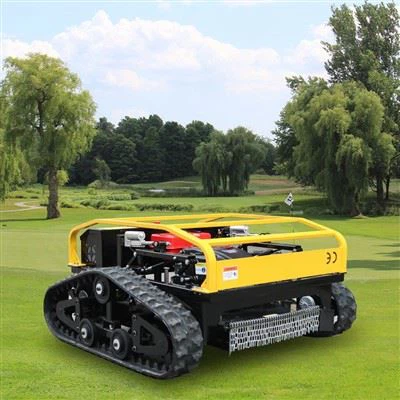
Hey there! As a supplier of remote mowers, I often get asked, "Are remote mowers easy to maneuver?" Well, let's dive right into it and find out.
First off, let's talk about what a remote mower is. A remote mower, also known as a Remote Control Mower, is a machine that can be operated from a distance using a remote control. This type of mower is great for a variety of reasons. For one, it allows you to mow in areas that might be difficult or dangerous to reach on foot. Think steep slopes, rough terrain, or areas near bodies of water.
Now, back to the question at hand - are they easy to maneuver? The short answer is yes, but like anything, it does take a bit of practice.
Most modern remote mowers come with user - friendly remote controls. These remotes are designed to be intuitive, with clearly marked buttons for forward, backward, left, and right movements. Some even have additional functions like speed control, blade engagement, and adjustable cutting heights.
Let's take a look at the Remote Control Grass Cutter. This machine is specifically designed for cutting grass in various settings. Its remote control system is straightforward. You can easily start the engine, move the mower forward or backward, and turn it in any direction with just a few presses of the buttons. The controls are responsive, so when you give a command, the mower reacts almost immediately.
The Remote Control Flail Mower is another great example. Flail mowers are known for their ability to handle thick vegetation and tough grass. The remote control for this type of mower gives you full control over its movements. You can navigate through dense bushes, around trees, and even in tight corners. The range of the remote is usually quite good, allowing you to stay at a safe distance while still being able to operate the mower effectively.
One of the advantages of remote mowers is their agility. They are often smaller and more compact than traditional ride - on or push mowers. This means they can easily maneuver around obstacles and in confined spaces. You can quickly change directions, which is especially useful when mowing around flower beds, garden statues, or other landscaping features.
However, it's important to note that while remote mowers are generally easy to maneuver, there are a few things you need to keep in mind. First, you need to familiarize yourself with the remote control. Take the time to read the user manual and practice using the controls in an open area. This will help you get a feel for how the mower responds to your commands.
Second, the terrain can have an impact on the maneuverability of the mower. On flat, even ground, it's a breeze to operate. But on uneven or sloped terrain, you need to be more careful. You might need to adjust the speed and movement of the mower to ensure it doesn't tip over or get stuck.
Another factor is the weather conditions. Wet grass can make the mower's wheels slip, which can affect its ability to turn and move smoothly. In such cases, you may need to reduce the speed and be more cautious with your maneuvers.
When it comes to maintenance, remote mowers are also relatively easy to handle. Since you can control them from a distance, you can easily move the mower to a maintenance area without having to push or tow it. This makes tasks like blade sharpening, oil changes, and general cleaning much more convenient.
In conclusion, remote mowers are definitely easy to maneuver, especially with a bit of practice. They offer a great solution for mowing in difficult or dangerous areas. Whether you're a professional landscaper or a homeowner looking to maintain a large property, a remote mower can be a valuable addition to your equipment.
If you're interested in learning more about our remote mowers or are thinking about making a purchase, I'd love to chat with you. We have a wide range of models to suit different needs and budgets. Just reach out, and we can start a conversation about how a remote mower can work for you.


References:
- Manufacturer's user manuals for remote mowers
- Industry reports on the development and usability of remote - controlled lawn equipment