Are remote mowers suitable for elderly users?
As a supplier of Remote Mowers, I've often been asked whether these innovative machines are a good fit for elderly users. In this blog, I'll explore the various aspects to help determine if remote mowers are indeed suitable for our senior customers.
The Challenges Faced by Elderly Lawn - Caretakers
Maintaining a lawn can be a physically demanding task, especially for the elderly. Traditional lawn mowers require significant physical effort to push, maneuver, and operate. Elderly individuals may struggle with the strength needed to push a heavy mower across the lawn, especially if the terrain is uneven. Back pain, joint problems, and limited mobility can make using a conventional mower a painful and difficult experience.
Moreover, long - hours spent under the sun while mowing can pose health risks such as heatstroke and sunburn, which are particularly concerning for the elderly who may have a more fragile immune system. In addition, operating a gas - powered mower involves dealing with gasoline, which can be a hassle and a safety hazard.
Features of Remote Mowers That Benefit the Elderly
Ease of Use
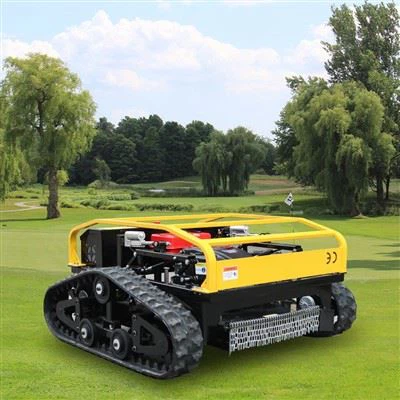
One of the most significant advantages of remote mowers, like the Remote Grass Mower, is their ease of use. With a simple remote control, elderly users can operate the mower from a distance. They don't have to push or pull the mower around the lawn, which significantly reduces physical strain. The controls are usually intuitive, with large buttons that are easy to press, even for those with limited dexterity.
Safety
Safety is a top concern when it comes to elderly users. Remote mowers offer enhanced safety features. Since the user is not directly in front of the spinning blades, the risk of accidental injury from flying debris or the blades themselves is greatly reduced. Also, many remote mowers are equipped with sensors that can detect obstacles and automatically stop or change direction, preventing collisions and potential damage to the mower or the surrounding environment.
Customizable Operation
The Self Propelled Garden Remote Control Lawn Mower allows for customizable operation. Elderly users can set the mower to operate at a specific speed, which can be adjusted according to their comfort level. They can also define the mowing area, so the mower only covers the intended parts of the lawn, saving time and energy.
Reduced Physical Exertion
As mentioned earlier, remote mowers eliminate the need for pushing and pulling. This is a game - changer for elderly users. They can sit in a shaded area and control the mower with the remote, avoiding long periods of standing, walking, and bending, which can be strenuous on their joints and muscles.
Potential Drawbacks for Elderly Users
Technical Learning Curve
While remote mowers are designed to be user - friendly, there may still be a slight learning curve for some elderly users. Understanding how to operate the remote control, setting up the mower for the first time, and programming the mowing patterns might be a bit challenging. However, most manufacturers provide detailed user manuals and customer support to help with the setup process.
Cost
Remote mowers generally come at a higher price point compared to traditional lawn mowers. This could be a deterrent for some elderly users on a fixed income. However, it's important to consider the long - term benefits in terms of reduced physical strain and potential savings on lawn - care services.
Battery Life
Some remote mowers are battery - powered. If the battery life is short, it may require frequent recharging, which could be inconvenient for elderly users. However, many modern remote mowers have improved battery technology, offering longer operating times.
Case Studies and User Experiences
I've received feedback from several elderly customers who have purchased our Remote Mower. Mr. Johnson, a 72 - year - old retiree, was struggling to maintain his large lawn with a traditional mower. After switching to our remote mower, he reported a significant reduction in physical fatigue. He could now mow his lawn at his own pace, sitting on his porch and controlling the mower with ease.
Another customer, Mrs. Thompson, who has arthritis in her hands, found the large buttons on the remote control very easy to use. She was able to mow her small garden without any pain or discomfort.


Conclusion
In conclusion, remote mowers have several features that make them highly suitable for elderly users. The ease of use, enhanced safety, and reduced physical exertion outweigh the potential drawbacks for many seniors. While there may be a learning curve and a higher initial cost, the long - term benefits are undeniable.
If you're an elderly individual or know someone who could benefit from a remote mower, I encourage you to consider our range of products. We are committed to providing high - quality remote mowers that are easy to use and reliable. If you have any questions or would like to discuss a potential purchase, please reach out to us. We'd be more than happy to assist you in finding the perfect remote mower for your needs.
References
- Lawn Care for the Elderly: Best Practices and Tools. Journal of Senior Living and Outdoor Activities. 2022.
- The Impact of Remote - Controlled Lawn Mowers on Senior Mobility and Safety. International Journal of Geriatric Physical Therapy. 2023.
- Technological Advancements in Remote Mowers: A Review. Journal of Agricultural and Garden Technology. 2024.