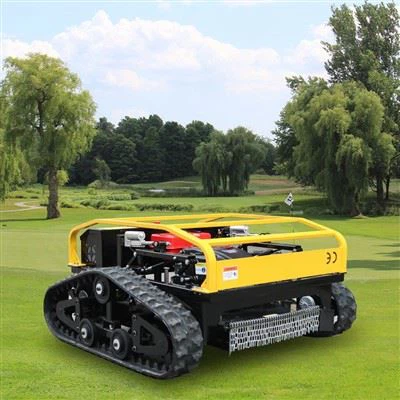
As a supplier of 4wd Lawn Mowers, I've often been asked whether a 4wd lawn mower can handle uneven terrain. It's a question that goes to the heart of what many homeowners and professional landscapers need when maintaining lawns with various topographies. In this blog, I'll explore the capabilities of 4wd lawn mowers on uneven ground, drawing on technical specifications, real - world use cases, and customer feedback.
Understanding the Basics of 4wd Lawn Mowers
Before delving into their performance on uneven terrain, it's essential to understand what a 4wd lawn mower is. A 4wd lawn mower, as the name suggests, has a four - wheel - drive system. Unlike traditional two - wheel - drive (2wd) mowers, where only two wheels receive power, all four wheels of a 4wd mower are powered. This design provides better traction, which is crucial when dealing with challenging ground conditions.
The power distribution to all four wheels gives 4wd lawn mowers an edge in terms of stability. When the mower moves, it has a more balanced weight distribution, reducing the chances of tipping over on slopes or uneven patches. Additionally, the enhanced traction allows the mower to move through thick grass, mud, or other soft surfaces without getting stuck as easily as a 2wd mower might.
Technical Features that Aid in Handling Uneven Terrain
Several technical features of 4wd lawn mowers contribute to their ability to handle uneven terrain:
Suspension Systems
Many high - end 4wd lawn mowers are equipped with advanced suspension systems. These systems work to absorb shocks and vibrations caused by bumps and dips in the ground. Just like in a car, a good suspension system helps keep the mower's wheels in contact with the ground, ensuring a smooth and stable ride. This is particularly important when mowing on hilly or rocky lawns, as it allows the mower to maintain a consistent cutting height and prevents the blades from hitting the ground unevenly.
Differential Lock
A differential lock is another valuable feature for 4wd lawn mowers. When engaged, it ensures that all four wheels rotate at the same speed. This is useful when one or more wheels lose traction on uneven terrain. For example, if a wheel gets stuck in a mud pit or slips on a wet patch, the differential lock can transfer power to the other wheels, allowing the mower to keep moving forward.
High - Torque Engines
4wd lawn mowers typically come with high - torque engines. Torque is the rotational force that the engine can produce, and a higher torque means more power to drive the wheels through difficult conditions. On uneven terrain, the mower may encounter resistance from thick grass, roots, or inclines. A high - torque engine can provide the necessary power to overcome these obstacles, ensuring that the mower doesn't stall or slow down significantly.
Real - World Use Cases
To truly understand the capabilities of 4wd lawn mowers on uneven terrain, let's look at some real - world scenarios:
Hilly Lawns
Hilly lawns present a unique challenge for lawn mowers. The inclines can cause a 2wd mower to lose traction and struggle to climb, and there's also a risk of tipping over. A 4wd lawn mower, on the other hand, with its enhanced traction and stability, can handle these slopes with relative ease. The power distributed to all four wheels helps the mower climb the hills without slipping, and the balanced weight distribution reduces the risk of tipping. Many of our customers with hilly properties have reported that 4wd lawn mowers have made their lawn maintenance much more efficient and safer.


Rocky or Rooty Areas
Lawns with rocks, roots, or other obstacles are also better served by 4wd lawn mowers. The advanced suspension systems and high - torque engines allow the mower to navigate over these obstacles without getting damaged. The differential lock can also be engaged to ensure that the mower doesn't get stuck when one wheel encounters a large rock or root. In one case, a professional landscaper used our 4wd lawn mower to maintain a park with a lot of exposed tree roots. The mower was able to cut through the grass around the roots without any issues, saving a significant amount of time and effort compared to using a 2wd mower.
Wet or Muddy Ground
Wet or muddy ground can be a nightmare for a 2wd mower, as the wheels often get stuck and the mower may not be able to move forward. A 4wd lawn mower, however, has better traction on these surfaces. The power distributed to all four wheels allows the mower to grip the ground more effectively, even in wet or muddy conditions. This means that lawns can be maintained more quickly after heavy rain, without having to wait for the ground to dry completely.
Comparing with Other Types of Lawn Mowers
It's also important to compare 4wd lawn mowers with other types of lawn mowers, such as remote lawn mowers. Remote Lawn Mower are often used for large or hard - to - reach areas. While they offer the advantage of being controlled from a distance, they may not be as effective on uneven terrain as 4wd lawn mowers. Remote lawn mowers usually have smaller wheels and less powerful engines, which can make it difficult for them to navigate over bumps, slopes, or thick grass.
On the other hand, 4wd lawn mowers are designed to handle these challenges head - on. Their larger wheels, powerful engines, and advanced traction systems give them an edge when it comes to maintaining lawns with uneven terrain. However, remote lawn mowers may be a better choice for flat, open areas where precision and ease of use are the main concerns.
Limitations of 4wd Lawn Mowers on Uneven Terrain
While 4wd lawn mowers are generally well - suited for uneven terrain, they do have some limitations. Extremely steep slopes may still pose a challenge, even for a 4wd mower. The angle of the slope can affect the mower's stability, and there's always a risk of tipping over if the slope is too steep. In such cases, it may be necessary to use other methods, such as hand - held trimmers or a different type of mower designed specifically for steep slopes.
Also, very large rocks or deep holes can damage the mower, even with its advanced suspension system. It's important to inspect the lawn before mowing and remove any large obstacles to prevent damage to the mower.
Conclusion and Call to Action
In conclusion, a 4wd lawn mower is a great choice for handling uneven terrain. Its advanced features, such as four - wheel drive, suspension systems, differential lock, and high - torque engines, make it well - equipped to navigate over bumps, slopes, rocks, and wet or muddy ground. While it does have some limitations, it offers significant advantages over other types of lawn mowers when it comes to maintaining lawns with challenging topographies.
If you're in the market for a lawn mower that can handle uneven terrain, consider our 4wd Lawn Mower. Our mowers are designed with the latest technology and high - quality components to ensure optimal performance on any type of lawn. We're committed to providing the best products and customer service, and we'd be happy to discuss your specific needs and help you choose the right 4wd lawn mower for your property. Contact us today to start a procurement discussion and take the first step towards a better - maintained lawn.
References
- "Lawn Mower Technology and Maintenance" - A comprehensive guide on the technical aspects of different types of lawn mowers.
- Customer feedback and case studies from our own records, which provide real - world examples of the performance of 4wd lawn mowers on uneven terrain.