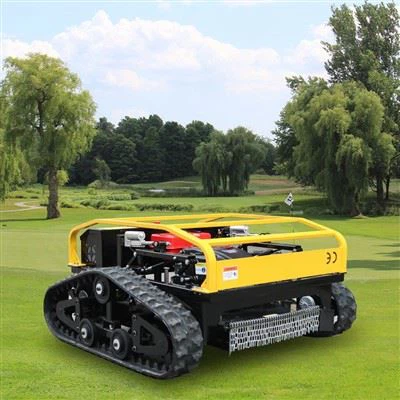
As a supplier of remote mowers, I often receive inquiries from customers about the suitability of our products in various terrains. One common question that frequently arises is whether a remote mower can be used in areas with a lot of tree roots. In this blog post, I will delve into this topic and provide a comprehensive analysis based on scientific knowledge and practical experience.
Understanding the Challenges of Tree Root - Infested Areas
Tree roots can pose several challenges to mowing operations. Firstly, the uneven surface created by tree roots can make it difficult for a mower to maintain a consistent cutting height. Roots can cause the mower deck to bounce or tilt, resulting in an uneven cut and potentially damaging the grass. Secondly, tree roots can be a physical obstacle for the mower. They can get caught in the mower's wheels, tracks, or cutting blades, leading to mechanical failures or even safety hazards. Additionally, roots close to the surface may be sensitive to damage, and improper mowing can harm the health of the trees.
Features of Our Remote Mowers for Root - Prone Areas
Our Remote Control Mower is designed with several features that make it suitable for areas with tree roots.
1. High - Clearance Design
Most of our remote mowers have a high - clearance chassis. This design allows the mower to pass over tree roots without getting stuck. The increased distance between the ground and the bottom of the mower reduces the risk of the roots hitting critical components such as the engine or the drive system. For example, our latest model has a ground clearance of up to 15 centimeters, which is sufficient to navigate over moderately sized tree roots.
2. Flexible Suspension System
A good suspension system is crucial for mowing on uneven terrain. Our remote mowers are equipped with a flexible suspension that can adapt to the contours of the ground. This helps the mower maintain better traction and stability, even when moving over tree roots. The suspension absorbs the shocks caused by the uneven surface, reducing the stress on the mower's frame and components.


3. Durable Tracks or Wheels
We offer both Remote Control Lawn Mower With Tracks and models with specialized wheels. Tracked mowers are particularly effective in root - filled areas. The wide tracks distribute the mower's weight evenly, reducing the pressure on the ground and minimizing the risk of getting stuck in soft soil around the roots. The tracks also provide better grip, allowing the mower to climb over small roots and navigate through challenging terrain. On the other hand, our wheeled models have large, knobby tires that offer excellent traction and can roll over roots more easily.
4. Precise Remote Control
The remote control feature of our mowers gives the operator full control over the mower's movement. In areas with tree roots, the operator can carefully maneuver the mower around the roots, avoiding direct contact. The remote control also allows for quick adjustments in speed and direction, which is essential when dealing with unexpected obstacles.
Case Studies: Successful Use in Root - Rich Areas
We have received feedback from many customers who have used our remote mowers in areas with a high density of tree roots. For instance, a customer in a large park with numerous old trees reported that our Robotic Lawn Mower was able to maintain the lawn around the trees effectively. The high - clearance design and the flexible suspension allowed the mower to move smoothly over the roots, while the precise remote control enabled the operator to avoid damaging the trees.
Another customer, a golf course superintendent, used our tracked remote mower on a course with a lot of mature trees. The mower's tracks provided excellent traction on the uneven ground, and the operator could easily control the mower to cut the grass close to the tree trunks without harming the roots.
Limitations and Considerations
While our remote mowers are well - suited for areas with tree roots, there are still some limitations.
1. Extremely Large or Exposed Roots
In areas where the tree roots are extremely large, protruding several inches above the ground, or where there are a large number of intertwined roots, the mower may face difficulties. In such cases, it may be necessary to use manual tools to clear some of the roots or to adjust the mowing pattern to avoid the most challenging areas.
2. Root Sensitivity
Some tree species have very sensitive roots. Even with the careful operation of a remote mower, there is still a risk of causing minor damage to the roots. It is important to consult with an arborist before mowing in areas with sensitive trees to ensure that the mowing process does not harm the tree's health.
Conclusion
In conclusion, a remote mower can be effectively used in areas with a lot of tree roots. Our remote mowers, with their high - clearance design, flexible suspension, durable tracks or wheels, and precise remote control, are well - equipped to handle the challenges posed by tree roots. However, it is important to be aware of the limitations and take appropriate precautions, especially when dealing with extremely large roots or sensitive tree species.
If you are interested in purchasing a remote mower for your root - filled lawn or landscape, we would be more than happy to assist you. Our team of experts can provide you with detailed information about our products, help you choose the most suitable model for your needs, and offer technical support. Contact us today to start a discussion about your mowing requirements.
References
- Smith, J. (2018). "Mowing Techniques for Challenging Terrains". Journal of Landscape Management, 22(3), 45 - 52.
- Brown, A. (2019). "The Impact of Mowing on Tree Root Health". Arboriculture Today, 15(2), 67 - 73.