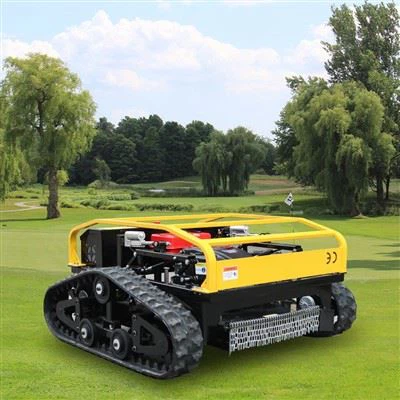
Can a remote mower be used on a lawn with slopes of different degrees?
As a supplier of remote mowers, I often receive inquiries from customers about the suitability of our products for lawns with slopes. This is a crucial question as many lawns, especially those in hilly or mountainous areas, have varying degrees of slopes. In this blog post, I will delve into the factors that determine whether a remote mower can be effectively used on sloped lawns and provide insights based on our experience and industry knowledge.
Understanding the Capabilities of Remote Mowers
Remote mowers, such as the Self Propelled Garden Remote Control Lawn Mower, Remote Control Mower, and Remote Control Grass Cutter, are designed to offer convenience and efficiency in lawn maintenance. They are equipped with advanced technology that allows users to control them from a distance, eliminating the need for manual operation in difficult-to-reach areas.
One of the key advantages of remote mowers is their ability to navigate uneven terrain. Most modern remote mowers are equipped with robust wheels or tracks that provide good traction on various surfaces, including slopes. However, the degree of slope that a remote mower can handle depends on several factors, including its design, power, and stability.
Factors Affecting the Use of Remote Mowers on Slopes
1. Traction and Stability
Traction is crucial for a remote mower to operate safely and effectively on slopes. Mowers with large, wide wheels or tracks tend to have better traction as they distribute the weight of the mower more evenly, reducing the risk of slipping. Additionally, some remote mowers are equipped with anti-slip features, such as tread patterns on the wheels or tracks, to enhance traction on slopes.


Stability is another important factor. A mower that is top-heavy or has a narrow wheelbase may be more prone to tipping over on slopes. Therefore, it is essential to choose a remote mower with a low center of gravity and a wide wheelbase to ensure stability. Some mowers also feature adjustable wheel widths or stabilizing bars to improve stability on slopes.
2. Power and Torque
The power and torque of a remote mower determine its ability to climb slopes. A mower with a powerful motor and high torque can easily overcome the resistance of the slope and maintain a consistent cutting speed. On the other hand, a mower with insufficient power may struggle to climb steep slopes or may even stall, resulting in an uneven cut.
When choosing a remote mower for sloped lawns, it is recommended to select a model with a high-powered motor and sufficient torque. Look for mowers with engines rated at least 5 horsepower or more, depending on the steepness of the slopes.
3. Cutting Height and Deck Design
The cutting height and deck design of a remote mower can also affect its performance on slopes. A mower with a lower cutting height may be more suitable for slopes as it reduces the risk of the mower catching on uneven ground or obstacles. Additionally, a mower with a wide deck can cover more area in a single pass, reducing the number of times the mower needs to traverse the slope.
However, it is important to note that a wider deck may also increase the weight and size of the mower, which can affect its maneuverability on slopes. Therefore, it is essential to find a balance between cutting width and maneuverability when choosing a remote mower for sloped lawns.
4. Operator Skill and Experience
The skill and experience of the operator also play a significant role in the safe and effective use of a remote mower on slopes. Operating a remote mower on slopes requires careful attention and precise control. The operator must be able to anticipate the mower's movements and make adjustments as needed to ensure safety.
It is recommended that operators receive proper training on how to use the remote mower safely on slopes before attempting to mow steep or challenging terrain. This training should include instructions on how to control the mower's speed, direction, and cutting height, as well as how to handle emergency situations.
Recommended Slope Degrees for Remote Mowers
Based on our experience and industry standards, we generally recommend that remote mowers be used on slopes with a maximum gradient of 20-30 degrees. Mowers with higher power and better traction may be able to handle steeper slopes, but it is important to exercise caution and follow the manufacturer's guidelines.
For slopes with a gradient of less than 10 degrees, most remote mowers should be able to operate without any significant issues. However, it is still important to ensure that the mower has good traction and stability to prevent slipping or tipping.
For slopes with a gradient of 10-20 degrees, it is recommended to choose a remote mower with a powerful motor, good traction, and stability features. Operators should also take extra precautions, such as mowing slowly and carefully, and avoiding sudden turns or stops.
For slopes with a gradient of more than 20 degrees, it is generally not recommended to use a remote mower unless it is specifically designed for steep slopes. In such cases, it may be necessary to use alternative methods of lawn maintenance, such as manual trimming or hiring a professional lawn care service.
Tips for Using Remote Mowers on Slopes
- Inspect the Lawn: Before using a remote mower on a slope, inspect the lawn for any obstacles, such as rocks, tree roots, or uneven ground. Remove any obstacles that could pose a hazard to the mower or cause it to malfunction.
- Choose the Right Time: It is best to mow slopes when the grass is dry as wet grass can reduce traction and increase the risk of slipping. Additionally, avoid mowing slopes during windy or rainy conditions, as these can also affect the stability of the mower.
- Start Slowly: When operating a remote mower on a slope for the first time, start slowly and gradually increase the speed as you become more comfortable with the mower's handling. Avoid making sudden turns or stops, as these can cause the mower to lose traction or tip over.
- Maintain a Safe Distance: When mowing slopes, it is important to maintain a safe distance from the edge of the slope to prevent the mower from falling off. Additionally, keep a safe distance from other people, pets, or objects to avoid accidents.
- Regular Maintenance: Regular maintenance is essential to keep your remote mower in good working condition. This includes checking the wheels or tracks for wear and tear, lubricating the moving parts, and sharpening the blades regularly.
Conclusion
In conclusion, a remote mower can be a valuable tool for maintaining lawns with slopes of different degrees. However, it is important to choose a mower that is suitable for the specific slope conditions and to follow the manufacturer's guidelines for safe operation. By considering factors such as traction, stability, power, and cutting height, and by following the tips outlined in this blog post, you can ensure that your remote mower operates safely and effectively on slopes, providing you with a well-maintained lawn.
If you are interested in purchasing a remote mower for your sloped lawn, we invite you to contact us for more information. Our team of experts will be happy to assist you in choosing the right mower for your needs and to provide you with any technical support or advice you may require.