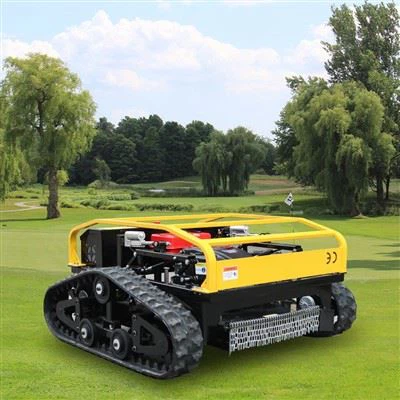
Can a remote mower be used on slopes with a high incline? That's a question I get asked a lot as a supplier of remote mowers. And it's a valid one, considering the unique challenges that come with mowing on steep slopes. In this blog post, I'll share my insights on whether remote mowers are up to the task and what you need to know before using one on a high - incline slope.
First off, let's talk about the advantages of using a remote mower in general. Remote mowers, like the Remote Control Mower, offer a great deal of convenience. You can operate them from a safe distance, which is especially useful when dealing with difficult - to - reach areas or dangerous terrain. They're also great for people who may have physical limitations that make it hard to use a traditional push or riding mower.
When it comes to slopes, the main concern is safety. Mowing on a high - incline slope can be extremely dangerous with a regular mower. There's a risk of the mower tipping over, which can not only damage the equipment but also cause serious injury to the operator. That's where a remote mower really shines. Since you're controlling it from afar, you can keep yourself out of harm's way.
But just because a remote mower keeps you safe doesn't mean it can handle any slope. The ability of a remote mower to work on a high - incline slope depends on several factors.
One of the most important factors is the design of the mower. Some remote mowers, such as the Self Propelled Garden Remote Control Lawn Mower, are specifically engineered to handle slopes. These mowers often have a low - center of gravity, which helps prevent tipping. They may also have wide - track wheels or tracks that provide better traction on uneven and sloped surfaces.
Traction is another crucial aspect. Without good traction, the mower may slip on the slope, making it difficult to control and potentially causing it to slide down. Remote mowers with rubber tracks or specialized tires are usually better at maintaining traction on slopes. Tracks, in particular, distribute the weight of the mower more evenly, reducing the risk of getting stuck or slipping.
The power of the mower also plays a role. A high - incline slope requires more power to climb and maneuver. If the mower doesn't have enough power, it may struggle to make it up the slope or may not be able to maintain a consistent speed while mowing. You'll want to look for a remote mower with a powerful engine or motor to ensure it can handle the demands of a steep slope.
Another thing to consider is the type of grass or vegetation on the slope. Thick, overgrown grass can put more strain on the mower, especially on a slope. A remote mower may have a harder time cutting through thick grass while climbing, and it could potentially stall. Make sure the mower you choose has a cutting system that's suitable for the type of grass you'll be mowing.
Now, let's talk about some of the limitations. Even the best - designed remote mowers have their limits when it comes to slope incline. Most manufacturers will specify the maximum slope angle that their mowers can safely handle. Generally, a slope with an incline of more than 30 - 35 degrees is considered very challenging for a remote mower. At extremely high inclines, the risk of the mower losing traction or tipping over increases significantly, even with the best safety features.
Weather conditions also matter. Wet or muddy slopes are much more slippery than dry ones. If it's been raining or if there's a lot of dew on the grass, the mower's traction will be reduced, and it may be more difficult to control. It's best to wait for the slope to dry out before using a remote mower.
Before using a remote mower on a high - incline slope, you should also do a thorough inspection of the area. Look for any obstacles, such as rocks, tree roots, or holes, that could cause the mower to get stuck or tip over. Clear the area as much as possible to ensure a smooth mowing operation.
When operating a remote mower on a slope, there are some best practices to follow. Start by mowing across the slope rather than up and down. This helps reduce the risk of tipping. Also, keep the speed of the mower slow and steady. A fast - moving mower is more likely to lose control on a slope.
If you're new to using a remote mower on slopes, it's a good idea to start with a less - steep slope and gradually work your way up as you gain more experience. This will allow you to get a feel for how the mower behaves on different inclines and how to control it effectively.
In conclusion, a remote mower can be used on slopes with a high incline, but it's not a one - size - fits - all solution. You need to consider the design, traction, power, and limitations of the mower, as well as the conditions of the slope and the type of grass. By choosing the right remote mower, such as the Remote Control Grass Cutter, and following the proper safety guidelines, you can safely and effectively mow high - incline slopes.
If you're in the market for a remote mower and have high - incline slopes on your property, I'd be more than happy to help you find the perfect model. We offer a wide range of remote mowers that are designed to handle various slopes and mowing conditions. Feel free to reach out to us to discuss your specific needs and start a procurement discussion.
References


- Manufacturer specifications of remote mowers
- Industry research on slope mowing with remote mowers