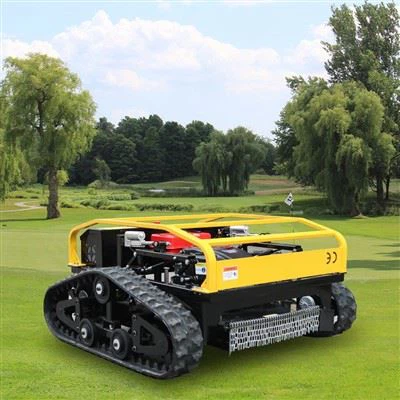
When it comes to maintaining a lawn on clay soil, many homeowners and landscapers often wonder if a 4wd lawn mower is a suitable choice. As a supplier of 4wd Lawn Mower, I am frequently asked this question. In this blog post, I will delve into the properties of clay soil, the capabilities of 4wd lawn mowers, and analyze whether using a 4wd lawn mower on clay soil is a viable option.
Understanding Clay Soil
Clay soil is characterized by its fine - textured particles. These particles are tightly packed together, which gives clay soil some unique properties. One of the most notable features is its high water - holding capacity. After rainfall or irrigation, clay soil retains water for a long time. This can be both an advantage and a disadvantage. On one hand, it means that the grass may have access to water for a more extended period, reducing the frequency of watering. On the other hand, the excess water can lead to waterlogging, making the soil sticky and difficult to work with.
Another characteristic of clay soil is its poor drainage. Due to the small pore spaces between the clay particles, water has a hard time seeping through the soil layer quickly. As the soil dries, it can become extremely hard and compacted. This compaction can prevent the roots of the grass from growing properly and accessing nutrients and oxygen.
The Advantages of 4wd Lawn Mowers
A 4wd lawn mower offers several benefits that make it potentially suitable for use on clay soil.
- Power and Traction: The four - wheel - drive system provides superior traction compared to a two - wheel - drive mower. On clay soil, especially when it is wet and slippery, the ability to drive all four wheels simultaneously allows the mower to move through the grass without getting stuck. The increased traction ensures that the mower can navigate slopes and uneven terrain on the clay - based lawn more effectively.
- Maneuverability: 4wd lawn mowers are generally more maneuverable. They can turn more sharply, which is useful when mowing a lawn with various obstacles or a complex layout. This maneuverability helps in achieving a more uniform cut across the lawn.
- Power for Tough Grass: Clay soil often supports thick and robust grass growth because of the high water and nutrient content. A 4wd lawn mower usually has a more powerful engine. This power enables it to cut through the tough grass blades more efficiently, providing a clean and even cut.
Potential Challenges of Using a 4wd Lawn Mower on Clay Soil
While the 4wd lawn mower has many advantages, there are also some potential challenges when using it on clay soil.
- Soil Compaction: The weight of a 4wd lawn mower can be quite substantial. When operating on clay soil, especially when it is wet, the mower's wheels can press down on the soil, exacerbating the compaction problem. This can further damage the grass roots' ability to access air, water, and nutrients, leading to a less healthy lawn in the long run.
- Cleaning: Clay soil is sticky, and it tends to cling to the mower's wheels, undercarriage, and cutting blades. This accumulation of clay can not only make the mower heavier but also affect its performance. The sticky soil can hinder the movement of the wheels and the rotation of the blades, reducing the mower's efficiency and potentially causing premature wear and tear.
Strategies for Using a 4wd Lawn Mower on Clay Soil
To overcome the challenges and make the most of using a 4wd lawn mower on clay soil, here are some strategies:


- Wait for the Right Time: Avoid mowing the lawn when the clay soil is wet. Wait until the soil has dried out a bit. This reduces the likelihood of the mower getting stuck and minimizes soil compaction. You can check the soil's moisture level by taking a small handful of soil and squeezing it. If it forms a ball and doesn't break apart easily, the soil is still too wet to mow.
- Regular Maintenance: After each use on clay soil, thoroughly clean the mower. Use a high - pressure hose to remove the clay from the wheels, undercarriage, and blades. This helps to keep the mower in good working condition and prevents the clay from hardening and causing problems.
- Tire Selection: Consider using specialized tires that are designed for use on soft or wet soils. These tires usually have a wider tread pattern and deeper grooves, which can improve traction and reduce the impact of the mower on the soil.
Comparing with Remote Lawn Mowers
In addition to 4wd lawn mowers, Remote Lawn Mower is another option for lawn maintenance. Remote lawn mowers offer the convenience of being controlled from a distance, which can be useful in some situations. However, when it comes to clay soil, a 4wd lawn mower may have an edge. Remote lawn mowers may not have the same level of power and traction as 4wd mowers. They might struggle to move through the thick grass and wet clay soil, especially on slopes.
Conclusion
In conclusion, it is possible to use a 4wd lawn mower on clay soil, but it requires careful consideration and proper management. The 4wd lawn mower's power, traction, and maneuverability make it a strong candidate for cutting grass on clay soil. However, users need to be aware of the potential problems such as soil compaction and mower cleaning. By following the strategies mentioned above, the negative impacts can be minimized, and the benefits of using a 4wd lawn mower can be fully exploited.
If you are interested in purchasing a 4wd lawn mower for your clay - soil lawn or have any questions about our products, we welcome you to reach out to discuss your needs. Whether you are a homeowner looking to maintain a small backyard or a professional landscaper with large - scale projects, our team is ready to provide you with the best solutions.
References
- Brady, N. C., & Weil, R. R. (2008). The Nature and Properties of Soils. Pearson Prentice Hall.
- Klienhenz, M. D., & Doohan, D. J. (2006). Turfgrass Management. John Wiley & Sons.