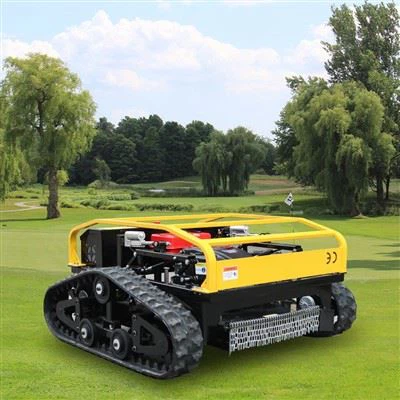
Adjusting the speed of a 4wd lawn mower is a crucial skill for both homeowners and professional landscapers. As a trusted supplier of high - quality 4wd Lawn Mower, I've encountered numerous customers with questions regarding speed adjustment. In this blog, I'll share comprehensive insights on how to effectively adjust the speed of a 4wd lawn mower.
Understanding the Basics of a 4wd Lawn Mower
Before delving into speed adjustment, it's essential to understand the fundamental components of a 4wd lawn mower. Unlike traditional two - wheel drive mowers, a 4wd lawn mower provides power to all four wheels. This design enhances traction, especially on uneven or hilly terrains. The power source, usually a gasoline engine or an electric motor, drives a system of gears and belts that in turn transfer power to the wheels.
The speed control mechanism can vary depending on the model. Some 4wd lawn mowers come with a simple lever or dial that allows you to incrementally increase or decrease the speed. Others may have a more advanced electronic control system with pre - set speed options.
Pre - adjustment Checks
Before attempting to adjust the speed of your 4wd lawn mower, there are several pre - adjustment checks you should perform:
Safety First
Ensure that the mower is turned off and the spark plug is disconnected (for gasoline engines) to prevent accidental starts. Wear appropriate safety gear, including gloves, safety glasses, and closed - toe shoes.
Inspect the Mower
Check the overall condition of the mower. Look for any signs of damage to the wheels, belts, or gears. A damaged component can affect the mower's performance and may even cause inaccurate speed control.
Fuel and Battery
If it's a gasoline - powered mower, check the fuel level. A low fuel level can cause the engine to run poorly, which may impact speed. For electric mowers, make sure the battery is fully charged.
Manual Speed Adjustment Methods
Lever - based Systems
Many 4wd lawn mowers use a lever to adjust the speed. This lever is usually located on the handlebar of the mower for easy access.
- Finding the Lever: Locate the speed control lever. It is often marked with symbols indicating direction (forward or reverse) and speed increments.
- Adjusting the Speed: To increase the speed, move the lever in the direction indicated for higher speeds. Similarly, to decrease the speed, move the lever in the opposite direction. It's important to make small, incremental adjustments and test the mower's speed after each adjustment.
- Testing: After making an adjustment, turn on the mower and slowly release the safety switch. Walk the mower forward in an open area to test the new speed. If the speed is not satisfactory, turn off the mower and make further adjustments.
Dial - based Systems
Some models feature a dial for speed adjustment:
- Locating the Dial: The dial is typically located on the control panel of the mower. It may have numbers or markings indicating speed levels.
- Adjusting the Speed: Rotate the dial clockwise to increase the speed and counter - clockwise to decrease it. Similar to the lever - based system, make small adjustments and test the mower's speed.
Electronic Speed Adjustment Systems
Many modern 4wd lawn mowers are equipped with electronic speed control systems. These systems offer more precise speed adjustment and may have additional features such as cruise control.
Pre - set Speed Options
- Selecting a Pre - set Speed: Electronic control panels often have pre - set speed options. These options are designed to provide optimal performance for different types of grass and terrain. For example, a lower speed may be suitable for thick, tall grass, while a higher speed can be used for short, thin grass.
- Using Cruise Control: Some electronic systems come with cruise control functionality. Once you've set the desired speed, you can activate cruise control. This allows the mower to maintain a consistent speed without the need to constantly adjust the controls.
Custom Speed Adjustment
- Accessing the Settings: If you need a custom speed setting, look for a "custom" or "manual" option on the control panel. This may require you to enter a specific speed value using the buttons on the panel.
- Fine - Tuning: Electronic systems often allow for fine - tuning of the speed. You can make very small adjustments to the speed to achieve the perfect balance between cutting efficiency and grass quality.
Factors Affecting Speed Adjustment
Terrain
The type of terrain you're mowing on plays a significant role in determining the appropriate speed.
- Flat and Even Terrain: On flat, even ground, you can generally set a higher speed. This allows you to cover more area in less time.
- Hilly or Uneven Terrain: When mowing on hills or uneven ground, it's important to reduce the speed. A lower speed provides better traction and stability, reducing the risk of the mower tipping over.
Grass Type and Condition
The type and condition of the grass also impact speed adjustment.
- Thick and Tall Grass: Thick, tall grass requires a slower speed. This gives the mower blades enough time to cut through the grass cleanly. If you set the speed too high, the blades may not be able to cut all the grass, resulting in an uneven cut.
- Short and Thin Grass: For short, thin grass, you can increase the speed. The mower can easily cut through the grass at a faster pace without sacrificing the quality of the cut.
Troubleshooting Speed Adjustment Issues
Inconsistent Speed
If the mower's speed is inconsistent, it could be due to several factors:
- Belt Slippage: Check the drive belts for signs of wear or damage. A loose or worn belt can cause the speed to fluctuate. Tighten or replace the belt if necessary.
- Engine Problems: A poorly running engine can also lead to inconsistent speed. Check the spark plug, air filter, and fuel system for any issues.
Difficulty in Adjusting Speed
If you're having trouble adjusting the speed:
- Control Mechanism Issues: Inspect the speed control lever, dial, or electronic control panel for any signs of damage or malfunction. If the control mechanism is not working properly, it may need to be repaired or replaced.
- Linkage Problems: In some mowers, the speed control is connected to the engine or transmission via a linkage. Check the linkage for any loose or broken parts.
Conclusion
Adjusting the speed of a 4wd lawn mower is a skill that can significantly improve the efficiency and quality of your lawn - mowing experience. By understanding the basic components of the mower, performing pre - adjustment checks, and following the appropriate adjustment methods, you can achieve the perfect speed for any type of terrain and grass.


If you're interested in purchasing a high - quality 4wd Lawn Mower or exploring our range of Remote Lawn Mower, we encourage you to contact us for a procurement discussion. Our team of experts is ready to assist you in finding the best mower for your needs.
References
- "Lawn Mower Maintenance Handbook"
- "Guide to Modern Lawn Mower Technology"
- Manufacturer's manuals for 4wd lawn mowers.