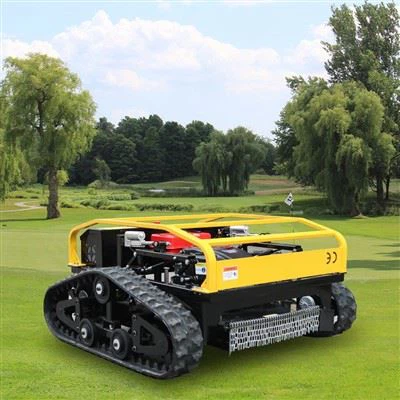
Hey there! As a supplier of remote mowers, I know how crucial it is to ensure the remote control functionality of these machines works flawlessly. In this blog, I'll share with you the steps and methods I use to test the remote control functionality of a remote mower.
1. Pre - test Checks
Before diving into the actual testing, there are a few pre - test checks that I always perform. First off, I make sure the mower and the remote control are fully charged. A low - battery situation can lead to intermittent signals and false test results.
I also inspect the physical condition of both the mower and the remote. Look for any visible damages like cracks, loose parts, or water ingress. For example, if the antenna on the remote is bent, it can significantly affect the signal strength.
Another important check is to ensure that the mower is on a flat and open surface. This provides an unobstructed area for the mower to move during the test, and it also helps in accurately assessing the range of the remote control.
2. Range Testing
One of the key aspects of the remote control functionality is its range. To test this, I start by standing close to the mower and turn on the remote control. I make sure the mower is in a ready - to - operate mode.
Then, I slowly start walking away from the mower while constantly sending commands to it using the remote. I use basic commands like forward, backward, left, and right turns. As I move further away, I pay close attention to when the mower stops responding to the commands.
The maximum distance at which the mower still responds accurately to the commands is the effective range of the remote control. It's important to note that the range can be affected by various factors such as obstacles, interference from other electronic devices, and the terrain. For instance, if there are large metal objects in the area, they can block or weaken the signal.
In an ideal situation, a good remote mower should have a decent range. For our Remote Control Lawn Mower With Tracks, we aim for a range that allows users to operate the mower from a reasonable distance, which gives them flexibility and safety while mowing large areas.
3. Signal Stability Testing
Signal stability is equally important as range. To test this, I stay within the known effective range of the remote control and continuously send a series of commands to the mower. I use a combination of short - duration and long - duration commands.
For example, I'll send a command to move the mower forward for a few seconds, then immediately send a command to turn it left. I repeat this process multiple times to see if the mower responds consistently. Any lag, missed commands, or sudden changes in the mower's movement can indicate signal instability.
I also test the signal stability under different environmental conditions. I might test the mower on a sunny day, a cloudy day, and even in light rain (as long as the mower is rated for such conditions). This helps in identifying any potential issues that might arise due to weather - related factors.
4. Functionality of Individual Buttons
The remote control of a mower usually has multiple buttons for different functions. I test each button individually to ensure they all work as intended.
I start by pressing the power - on button to turn on the mower. Then, I test the basic movement buttons like forward, backward, left, and right. I check if the mower moves in the correct direction and at the expected speed when these buttons are pressed.
Next, I test any additional function buttons. For example, some remote mowers have a speed - adjustment button. I press this button to increase or decrease the mower's speed and verify if the speed change is reflected accurately on the mower.
There might also be buttons for features like blade engagement or a self - parking function. I make sure these buttons trigger the corresponding actions on the mower. For our Robotic Lawn Mower, which has advanced features, thorough testing of each button is essential to provide a seamless user experience.
5. Response Time Testing
Response time is the time it takes for the mower to react to a command sent from the remote control. To test this, I use a stopwatch.
I press a command button on the remote and start the stopwatch simultaneously. Then, I note the time it takes for the mower to start moving or perform the commanded action. I repeat this process for different commands and calculate the average response time.


A fast response time is crucial for user safety and efficient operation. If the response time is too long, it can lead to accidents or make it difficult to control the mower accurately, especially in situations where quick maneuvers are required.
6. Interference Testing
In real - world scenarios, the remote control of a mower can be affected by interference from other electronic devices. To test for this, I set up a testing area with various electronic devices nearby.
I use devices like Wi - Fi routers, mobile phones, and even other remote - controlled toys. I turn on these devices and then test the remote control functionality of the mower as described above.
I check if the presence of these devices causes any interference, such as missed commands or signal loss. If there are issues, I try to identify the source of the interference and see if any adjustments can be made to the mower's remote control system to minimize the impact.
7. Battery Life Testing
The battery life of the remote control is an important factor, especially for users who need to operate the mower for long periods. To test the battery life, I fully charge the remote control and then use it to operate the mower continuously.
I note the time it takes for the battery to run out. During this process, I also monitor the performance of the remote control. Sometimes, as the battery level decreases, the signal strength or the functionality of the buttons might be affected.
We ensure that our Self Propelled Garden Remote Control Lawn Mower comes with a remote control that has a decent battery life, so users don't have to worry about constantly recharging it during mowing sessions.
Conclusion
Testing the remote control functionality of a remote mower is a comprehensive process that involves multiple steps. By conducting these tests, we can ensure that our products meet the highest standards of quality and performance.
If you're in the market for a reliable remote mower, we're here to provide you with top - notch products. Whether you need a mower for a small garden or a large commercial area, our range of remote mowers has got you covered. If you're interested in learning more about our products or want to discuss a potential purchase, feel free to reach out. We're always happy to have a chat and help you find the perfect mower for your needs.
References
- Industry standards for remote - controlled lawn mowers
- Internal testing protocols and data from our manufacturing facility