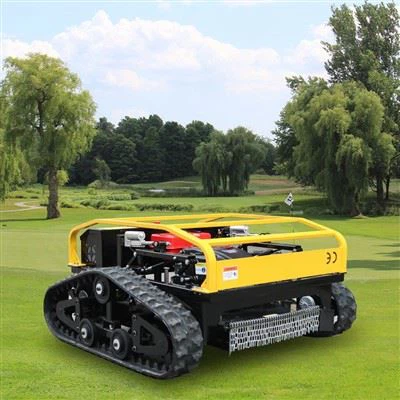
The 4WD (Four-Wheel Drive) system is a remarkable technology that enhances traction, stability, and performance in various vehicles. While commonly associated with cars and off-road vehicles, the 4WD system has also found its way into lawn mowers, offering unique benefits for maintaining large or challenging lawns. As a 4WD lawn mower supplier, I've had the opportunity to witness firsthand how these systems operate and how they differ from those in cars. In this blog post, I'll explore the key differences between the 4WD systems in lawn mowers and cars, shedding light on their design, functionality, and applications.
Design and Construction
One of the most significant differences between the 4WD systems in lawn mowers and cars lies in their design and construction. Cars are typically larger, heavier, and more complex machines designed for a wide range of driving conditions, including highways, city streets, and off-road terrain. As a result, their 4WD systems are often more robust and sophisticated, featuring multiple differentials, transfer cases, and advanced electronic controls.
In contrast, lawn mowers are smaller, lighter, and more specialized machines designed primarily for mowing grass. Their 4WD systems are generally simpler and more compact, with fewer components and less complex mechanisms. For example, many lawn mowers use a single-speed or two-speed 4WD system that provides basic traction and power to all four wheels. These systems are often mechanical or hydraulic in nature, relying on belts, gears, or fluid pressure to transfer power from the engine to the wheels.
Another key difference in design is the size and shape of the wheels. Cars typically have larger wheels with deeper treads, which provide better traction and stability on various surfaces. Lawn mowers, on the other hand, have smaller wheels with shallower treads, which are designed to minimize damage to the grass and provide a smooth, even cut. The smaller wheels also allow the lawn mower to maneuver more easily in tight spaces and around obstacles.
Functionality and Performance
The functionality and performance of the 4WD systems in lawn mowers and cars also differ significantly. Cars are designed to travel at high speeds and cover long distances, requiring a 4WD system that can provide consistent power and traction in a variety of driving conditions. This often means that car 4WD systems are designed to be engaged and disengaged on the fly, allowing the driver to switch between 2WD and 4WD mode as needed.
In contrast, lawn mowers are designed to operate at relatively low speeds and cover short distances, requiring a 4WD system that can provide maximum traction and power in challenging terrain. Lawn mower 4WD systems are typically engaged permanently or semi-permanently, providing continuous power to all four wheels to ensure smooth and efficient operation. This is especially important when mowing on slopes, uneven ground, or wet grass, where traction can be a challenge.


Another difference in functionality is the level of control and adjustability. Cars often have advanced electronic controls that allow the driver to adjust the 4WD system's settings, such as the torque distribution between the front and rear wheels, the locking of the differentials, and the activation of traction control systems. Lawn mowers, on the other hand, typically have simpler controls that allow the operator to engage and disengage the 4WD system or adjust the speed and direction of the mower.
Applications and Use Cases
The applications and use cases for the 4WD systems in lawn mowers and cars also vary significantly. Cars are used for a wide range of purposes, including commuting, traveling, off-roading, and towing. Their 4WD systems are designed to provide enhanced traction and stability in these various applications, allowing the driver to navigate through challenging terrain and adverse weather conditions.
In contrast, lawn mowers are used primarily for maintaining lawns and gardens. Their 4WD systems are designed to provide maximum traction and power in challenging terrain, such as slopes, hills, and uneven ground. This allows the operator to mow the grass more efficiently and effectively, without getting stuck or losing control of the mower.
Another difference in applications is the level of maintenance and upkeep. Cars require regular maintenance and servicing to ensure the proper functioning of their 4WD systems, including oil changes, filter replacements, and inspections of the differentials and transfer case. Lawn mowers, on the other hand, require less maintenance and upkeep, as their 4WD systems are generally simpler and more robust. However, it's still important to follow the manufacturer's recommended maintenance schedule to ensure the longevity and performance of the mower.
Conclusion
In conclusion, the 4WD systems in lawn mowers and cars differ significantly in their design, functionality, and applications. While both systems are designed to provide enhanced traction and stability, they are optimized for different purposes and operating conditions. As a 4WD lawn mower supplier, I understand the unique needs and requirements of our customers, and I'm committed to providing high-quality, reliable, and efficient lawn mowers that meet their needs.
If you're in the market for a 4WD lawn mower, I encourage you to visit our website at 4wd Lawn Mower to learn more about our products and services. We offer a wide range of 4WD lawn mowers, including Remote Lawn Mower, that are designed to provide maximum traction and power in challenging terrain. Our team of experts is also available to answer any questions you may have and help you choose the right lawn mower for your needs.
Contact us today to start a discussion about your lawn mower requirements and explore how our 4WD lawn mowers can transform your lawn maintenance experience. We look forward to hearing from you!
References
- SAE International. (2021). SAE Handbook: Mobility Systems Engineering. Warrendale, PA: SAE International.
- Bosch Automotive Handbook. (2018). 8th Edition. Stuttgart, Germany: Robert Bosch GmbH.
- Toro. (n.d.). Understanding 4WD Lawn Mowers. Retrieved from [Toro Website]
- John Deere. (n.d.). 4WD Lawn Mower Technology. Retrieved from [John Deere Website]