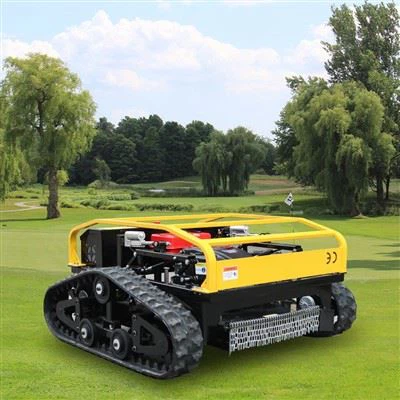
As a provider of Remote Mowers, I've witnessed firsthand the growing demand for efficient and reliable lawn - care solutions. One of the most critical components of a remote mower is its cutting blade. In this blog, I'll delve into how the cutting blade of a remote mower performs, discussing its design, functionality, and the factors that affect its efficiency.
Design and Construction
The design of a remote mower's cutting blade is a result of extensive research and engineering. Modern cutting blades are typically made from high - carbon steel or stainless steel. High - carbon steel blades are known for their sharpness and durability. They can hold an edge for a long time, which is essential for a clean and precise cut. Stainless steel blades, on the other hand, are resistant to rust and corrosion, making them ideal for use in wet or humid environments.
The shape of the cutting blade also plays a crucial role in its performance. Most remote mowers use a rotary blade design. The blade is usually curved or angled to create a suction effect as it spins. This suction helps to lift the grass upright, allowing the blade to cut it more cleanly at the base. The number of blades can vary depending on the size and model of the remote mower. Some smaller mowers may have a single blade, while larger, more powerful models can have two or more blades working in tandem.
The construction of the blade is another important factor. The blade needs to be balanced properly to ensure smooth operation. An unbalanced blade can cause excessive vibration, which not only reduces the cutting efficiency but also puts additional stress on the mower's motor and other components. Manufacturers use precision machining techniques to ensure that each blade is perfectly balanced before it is installed in the mower.
Cutting Performance
When it comes to cutting performance, the remote mower's blade needs to be able to handle a variety of grass types and conditions. Whether it's thick, tall grass or thin, fine turf, the blade should be able to make a clean and even cut.
In thick grass, the blade's sharpness and power are put to the test. A sharp blade can slice through the dense foliage without getting clogged or bogged down. The power of the mower's motor also plays a role here. A more powerful motor can drive the blade at a higher speed, enabling it to cut through thick grass more effectively.
For thin and fine turf, the blade needs to be able to make a precise cut without damaging the grass. The suction effect created by the blade's design helps to lift the grass so that it can be cut evenly at the right height. This is important for maintaining the health and appearance of the lawn.
The cutting width of the blade is also a significant factor. A wider cutting blade can cover more ground in a single pass, reducing the time it takes to mow a large area. However, a wider blade may also require more power to operate, so there needs to be a balance between cutting width and power consumption.
Factors Affecting Blade Performance
Several factors can affect the performance of a remote mower's cutting blade. One of the most obvious factors is the condition of the blade itself. Over time, the blade will become dull from repeated use. A dull blade will not cut as cleanly, and it may tear the grass instead of slicing it. This can lead to a ragged appearance of the lawn and can also make the grass more susceptible to disease.
Regular sharpening of the blade is essential to maintain its performance. Depending on how often the mower is used, the blade may need to be sharpened every few weeks or months. Some remote mowers come with self - sharpening systems, which can automatically sharpen the blade as it operates, reducing the need for manual maintenance.
The quality of the grass also affects the blade's performance. If the grass is wet, it can be more difficult for the blade to cut through it cleanly. Wet grass tends to clump together, which can clog the blade and reduce its efficiency. In addition, mowing wet grass can also cause damage to the lawn, as the mower's wheels can leave ruts in the soft ground.
The terrain is another factor. Remote mowers are designed to handle different types of terrain, but uneven or rough ground can put additional stress on the blade. If the mower is constantly bouncing or jolting over bumps, the blade may not be able to maintain a consistent cutting height, resulting in an uneven lawn.
Maintenance and Care
Proper maintenance and care of the cutting blade are essential for ensuring its long - term performance. As mentioned earlier, regular sharpening is crucial. In addition to sharpening, the blade also needs to be cleaned regularly. After each use, it's a good idea to remove any grass clippings or debris that may have accumulated on the blade. This can prevent corrosion and keep the blade in good working condition.
Inspecting the blade for damage is also important. If the blade is chipped or cracked, it should be replaced immediately. Using a damaged blade can not only affect the cutting performance but also pose a safety risk.
Storing the remote mower properly can also help to preserve the blade's performance. When the mower is not in use, it should be stored in a dry place to prevent rust and corrosion.
Conclusion
The cutting blade of a remote mower is a critical component that directly impacts its performance. A well - designed and maintained blade can make a significant difference in the quality of the cut and the overall efficiency of the mower. Whether you're looking for a Remote Control Lawn Mower With Tracks, a Robotic Lawn Mower, or a Remote Control Grass Cutter, understanding how the cutting blade performs is essential for making an informed purchasing decision.
If you're interested in our range of remote mowers and want to learn more about how our cutting blades can meet your lawn - care needs, we invite you to get in touch with us for procurement and discussion. We're always happy to provide more information and answer any questions you may have.


References
- Smith, J. (2020). "Advances in Lawn Mower Blade Technology". Journal of Agricultural Engineering.
- Johnson, A. (2021). "Factors Affecting the Performance of Rotary Lawn Mower Blades". International Journal of Machinery and Equipment.
- Brown, C. (2019). "Maintenance and Care of Lawn Mower Blades". Home Gardening Magazine.