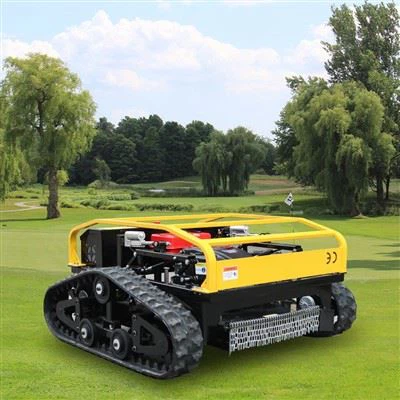
In the realm of modern lawn care, remote mowers have emerged as a revolutionary solution, offering unparalleled convenience and efficiency. As a leading remote mower supplier, I am often asked about the fuel types that power these remarkable machines. In this blog post, I will delve into the various fuel options available for remote mowers, exploring their advantages, disadvantages, and suitability for different applications.
Gasoline-Powered Remote Mowers
Gasoline-powered remote mowers are a popular choice among users who require high power and extended runtime. These mowers are equipped with internal combustion engines that burn gasoline to generate power. One of the primary advantages of gasoline-powered mowers is their ability to deliver consistent and robust performance, making them ideal for large lawns and tough mowing conditions.
The high power output of gasoline engines allows these mowers to cut through thick grass, weeds, and even small shrubs with ease. They also offer greater mobility compared to their electric counterparts, as they are not limited by the length of a power cord or the need for frequent battery recharging. This makes them suitable for use in remote areas or large properties where access to electricity may be limited.
However, gasoline-powered mowers also have some drawbacks. They produce emissions, which can contribute to air pollution and have a negative impact on the environment. Additionally, they require regular maintenance, including oil changes, spark plug replacements, and fuel filter cleanings. The noise generated by gasoline engines can also be a nuisance, especially in residential areas.
Electric-Powered Remote Mowers
Electric-powered remote mowers are an environmentally friendly alternative to gasoline-powered models. These mowers are powered by electricity, either from a rechargeable battery or a direct connection to a power source. One of the main advantages of electric mowers is their quiet operation, which makes them suitable for use in noise-sensitive areas such as residential neighborhoods.


Electric mowers also produce zero emissions, making them a more sustainable choice for the environment. They require less maintenance compared to gasoline-powered mowers, as they have fewer moving parts and do not require oil changes or fuel filter cleanings. Additionally, electric mowers are generally lighter and more maneuverable than their gasoline counterparts, making them easier to operate.
However, electric mowers also have some limitations. Battery-powered models have a limited runtime, which may not be sufficient for large lawns or extended mowing sessions. They also require a charging station, which can be inconvenient if you need to mow in multiple locations. Electric mowers connected to a power source are limited by the length of the power cord, which can restrict their mobility.
Hybrid Remote Mowers
Hybrid remote mowers combine the best of both worlds by using a combination of gasoline and electric power. These mowers typically have a small gasoline engine that acts as a generator to charge the battery, which in turn powers the electric motor. This allows the mower to operate for longer periods of time without the need for frequent battery recharging.
Hybrid mowers offer the high power and extended runtime of gasoline-powered models, while also providing the quiet operation and environmental benefits of electric mowers. They are suitable for use in large lawns and tough mowing conditions, as well as in noise-sensitive areas. However, hybrid mowers are generally more expensive than gasoline or electric models, and they require more maintenance due to the complexity of their hybrid system.
Choosing the Right Fuel Type for Your Remote Mower
When choosing a fuel type for your remote mower, it is important to consider your specific needs and preferences. If you have a large lawn or need to mow in tough conditions, a gasoline-powered mower may be the best choice. If you are concerned about the environment or need a quiet mower for use in a residential area, an electric-powered mower may be more suitable. If you need a mower with extended runtime and the ability to operate in a variety of conditions, a hybrid mower may be the ideal solution.
In addition to fuel type, there are other factors to consider when choosing a remote mower, such as cutting width, cutting height adjustment, and additional features. It is also important to choose a mower from a reputable manufacturer that offers a warranty and good customer support.
Our Remote Mower Offerings
As a remote mower supplier, we offer a wide range of remote mowers to suit different needs and budgets. Our product lineup includes Remote Control Flail Mower, Robotic Lawn Mower, and Remote Control Rotary Lawn Mower Automatic Robot Lawnmower.
Our remote control flail mowers are designed for heavy-duty mowing applications, such as cutting thick grass, weeds, and small shrubs. They feature a powerful gasoline engine and a durable flail cutting system that provides a clean and efficient cut. Our robotic lawn mowers are ideal for small to medium-sized lawns, offering autonomous operation and precise cutting. They are powered by rechargeable batteries and can be programmed to mow at specific times and intervals. Our remote control rotary lawn mowers are suitable for a variety of mowing tasks, from basic lawn maintenance to more challenging terrain. They are available in both gasoline and electric models, offering a range of power and performance options.
Contact Us for More Information
If you are interested in learning more about our remote mowers or have any questions about fuel types or other features, please do not hesitate to contact us. Our team of experts is available to provide you with detailed information and help you choose the right mower for your needs. We are committed to providing high-quality products and excellent customer service, and we look forward to working with you to find the perfect remote mower for your lawn care needs.
References
- "Lawn Mower Buying Guide." Consumer Reports. Accessed [Date].
- "Types of Lawn Mowers." The Spruce. Accessed [Date].
- "Gasoline vs. Electric Lawn Mowers: Which Is Better?" Bob Vila. Accessed [Date].