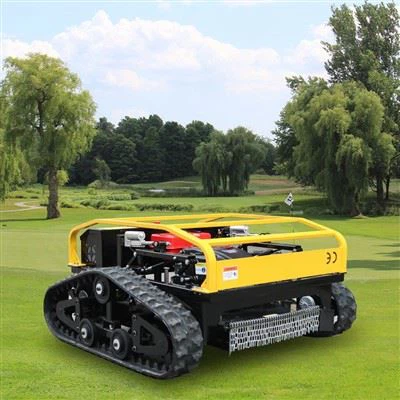
Can a remote mower be used on a hilly lawn?
As a supplier of remote mowers, this is a question I often get asked. Hilly lawns present unique challenges, and it's crucial to understand whether a remote mower is up to the task. In this blog, I'll delve into the feasibility of using a remote mower on a hilly lawn, exploring the advantages, limitations, and key considerations.
Advantages of Using a Remote Mower on a Hilly Lawn
One of the primary advantages of a remote mower on a hilly lawn is safety. Mowing steep slopes with a traditional walk - behind or riding mower can be extremely dangerous. There's a risk of the mower tipping over, which can lead to serious injuries. With a remote mower, the operator can control the machine from a safe distance, eliminating the need to be on the slope while mowing.
Another benefit is precision. Remote mowers are often equipped with advanced controls that allow for precise maneuvering. This is particularly useful on hilly terrain, where you may need to navigate around obstacles such as rocks, trees, or uneven ground. You can easily adjust the mower's path and speed to ensure a clean and even cut across the entire lawn.
Remote mowers also offer convenience. They can be programmed to follow a specific pattern, saving you time and effort. You can start and stop the mower with the push of a button, and some models even have features like automatic height adjustment, which is handy when dealing with the varying elevations of a hilly lawn.
Types of Remote Mowers Suitable for Hilly Lawns
When considering a remote mower for a hilly lawn, certain types are better suited than others.
The Remote Control Flail Mower is a great option. Flail mowers have multiple small blades that rotate at high speeds, making them effective at cutting through thick grass and weeds. They can handle uneven terrain well because the flails can adapt to the ground's contours. The remote - control feature allows you to operate the mower on slopes without putting yourself in danger.
Another suitable type is the Remote Control Grass Cutter. These mowers are designed specifically for cutting grass and are often lightweight and maneuverable. They can easily navigate around tight corners and obstacles on a hilly lawn. The remote control gives you the flexibility to operate the cutter from a safe vantage point.
The Remote Control Lawn Mower With Tracks is also an excellent choice for hilly areas. The tracks provide better traction compared to wheels, which is essential when mowing on slopes. They can grip the ground firmly, reducing the risk of the mower sliding or tipping over. This type of mower can handle steeper inclines with ease.
Limitations and Challenges
While remote mowers offer many advantages for hilly lawns, there are also some limitations.
One of the main challenges is battery life. Mowing on a hilly lawn requires more power than on a flat surface. The mower has to work harder to climb slopes and navigate uneven ground, which can drain the battery quickly. You need to choose a model with a long - lasting battery or have a spare battery on hand to ensure you can complete the mowing job without interruption.
Signal interference can also be an issue. The remote control relies on a wireless signal to communicate with the mower. On a hilly lawn, obstacles such as trees, buildings, or large rocks can block the signal, causing the mower to malfunction or lose connection. It's important to test the signal range and strength before starting to mow and ensure that there are no significant obstructions in the area.
Maintenance is another consideration. Hilly lawns can be rough on the mower, and components like the blades, tracks (if applicable), and motors may wear out faster. Regular maintenance, including blade sharpening, track inspection, and motor checks, is essential to keep the mower in good working condition.
Key Considerations Before Using a Remote Mower on a Hilly Lawn
Before purchasing and using a remote mower on a hilly lawn, there are several key factors to consider.
First, assess the slope of your lawn. Most remote mowers have a recommended maximum slope angle that they can safely handle. If your lawn has slopes that exceed this limit, the mower may not be suitable. It's important to measure the steepness of the slopes accurately to make an informed decision.
Second, consider the size and layout of your lawn. A large hilly lawn may require a mower with a larger cutting width and longer battery life. If your lawn has many obstacles or tight spaces, you'll need a mower that is highly maneuverable.
Third, look at the terrain conditions. If your lawn has rocky or bumpy areas, you'll need a mower that can withstand the impact and vibrations. Some mowers are designed with more durable components to handle such tough terrain.


Finally, think about your budget. Remote mowers can vary significantly in price, depending on their features and capabilities. Determine how much you're willing to spend and look for a mower that offers the best value for your money.
Conclusion
In conclusion, a remote mower can be used on a hilly lawn, and it offers many advantages in terms of safety, precision, and convenience. However, it's important to be aware of the limitations and challenges, such as battery life, signal interference, and maintenance requirements. By carefully considering the slope, size, terrain, and your budget, you can choose the right remote mower for your hilly lawn.
If you're interested in exploring our range of remote mowers for your hilly lawn, we're here to help. Our team of experts can provide you with detailed information and guidance to ensure you make the best choice. We welcome you to contact us to start a discussion about your specific needs and requirements for a successful mowing solution on your hilly lawn.
References
- "Lawn Mower Safety on Hilly Terrain" - A study on the safety aspects of mowing hilly lawns.
- "Remote - Controlled Lawn Mowers: Features and Performance" - An in - depth analysis of the features and performance of remote - controlled mowers.