As a supplier of 4wd lawn mowers, I've been asked countless times about the traction capabilities of these machines. This question is not just a matter of idle curiosity; it's a critical factor for anyone looking to maintain a large, uneven, or sloped lawn. In this blog, I'll delve into the science behind 4wd lawn mower traction, compare it to other types of mowers, and share some real - world insights based on my experience in the industry.
The Science of Traction
Traction is essentially the grip between the tires of a lawn mower and the ground. It's determined by several factors, including the weight distribution of the mower, the type of tires used, and the surface conditions of the lawn. When it comes to 4wd lawn mowers, the key advantage lies in the fact that power is delivered to all four wheels simultaneously.
In a 2 - wheel drive (2wd) lawn mower, only two wheels are responsible for propelling the machine forward. This can lead to situations where the powered wheels spin, especially on slippery or uneven terrain. For example, if you're mowing a lawn with wet grass or on a slight incline, the 2wd mower may struggle to maintain forward momentum as the weight of the mower shifts, causing the powered wheels to lose traction.
On the other hand, a 4wd Lawn Mower distributes the driving force across all four wheels. This means that even if one or two wheels encounter a slippery patch or an obstacle, the other wheels can continue to provide power and maintain forward movement. The increased number of powered wheels also helps to distribute the weight of the mower more evenly, reducing the pressure on each individual tire and minimizing the risk of tire slippage.
Tire Design and Traction
The type of tires used on a lawn mower plays a significant role in its traction capabilities. 4wd lawn mowers often come equipped with specially designed tires that are optimized for traction. These tires typically have deeper treads and a wider footprint compared to standard lawn mower tires.
The deeper treads help to channel water away from the tire surface, reducing the risk of hydroplaning on wet grass. They also provide more grip on uneven surfaces by digging into the ground and providing additional traction. The wider footprint of the tires increases the contact area between the tire and the ground, further enhancing traction.
In addition to the physical design of the tires, the material used can also affect traction. Some 4wd lawn mower tires are made from a softer rubber compound, which can conform to the shape of the ground more easily and provide better grip. However, softer rubber tires may wear out more quickly than harder rubber tires, so it's important to consider the trade - offs when choosing a lawn mower.
Real - World Performance
To really understand the benefits of 4wd lawn mower traction, it's helpful to look at some real - world scenarios. Let's say you have a large lawn with a significant slope. A 2wd lawn mower may struggle to climb the slope, especially if the grass is wet or the soil is loose. The powered wheels may spin, and the mower may even start to slide backwards, making it difficult or dangerous to operate.
In contrast, a 4wd lawn mower can handle slopes much more effectively. The additional power and traction provided by the four - wheel drive system allow the mower to maintain forward momentum even on steep inclines. This not only makes mowing the lawn easier and more efficient but also reduces the risk of accidents.
Another common scenario is mowing in areas with uneven terrain, such as around trees, flower beds, or rocky areas. A 2wd mower may get stuck or lose traction when it encounters an obstacle, while a 4wd mower can power through these areas with relative ease. The ability to maintain traction on uneven surfaces means that you can mow your lawn more thoroughly, without having to worry about leaving patches of uncut grass.
Comparison with Other Types of Mowers
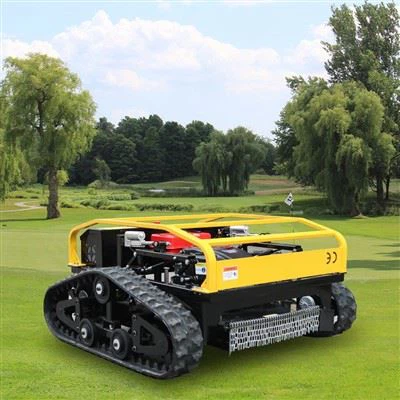
When comparing 4wd lawn mowers to other types of mowers, such as remote - controlled lawn mowers, it's important to consider the specific needs of your lawn. Remote Lawn Mower offer the convenience of being able to operate the mower from a distance, which can be useful for large or hard - to - reach areas. However, in terms of traction, they may not be as effective as 4wd lawn mowers.
Remote lawn mowers are often smaller and lighter, which can make them more prone to losing traction on uneven or sloped terrain. They may also have less powerful motors and less sophisticated drive systems, which can limit their ability to handle challenging conditions. While remote lawn mowers can be a great option for flat, small to medium - sized lawns, a 4wd lawn mower is generally a better choice for larger, more complex lawns.
Factors Affecting Traction in 4wd Lawn Mowers
While 4wd lawn mowers generally have better traction than 2wd mowers, there are still some factors that can affect their performance. One of the most important factors is the maintenance of the mower. Regularly checking and maintaining the tires, including proper inflation and tread depth, is crucial for optimal traction. Under - inflated tires can reduce the contact area between the tire and the ground, leading to decreased traction, while worn - out tires may not provide enough grip.


The weight of the mower also plays a role. If the mower is overloaded with accessories or grass clippings, it can put additional stress on the tires and reduce traction. It's important to follow the manufacturer's guidelines regarding the maximum weight capacity of the mower.
The surface conditions of the lawn can also impact traction. For example, mowing on a newly seeded lawn or on a lawn with soft, muddy soil can be challenging for any lawn mower, including 4wd models. In these cases, it may be necessary to adjust the mowing speed or wait for the ground to dry out before mowing.
Conclusion
In conclusion, 4wd lawn mowers do have better traction than their 2wd counterparts. The ability to deliver power to all four wheels, combined with specially designed tires, allows these mowers to handle a wider range of terrain and surface conditions. Whether you have a large, sloped lawn or an uneven, challenging landscape, a 4wd lawn mower can make the task of mowing easier, more efficient, and safer.
If you're in the market for a new lawn mower and are looking for a machine with excellent traction, I encourage you to consider a 4wd Lawn Mower. Our company offers a wide range of 4wd lawn mowers to suit different needs and budgets. We're always happy to answer any questions you may have and help you find the perfect mower for your lawn. If you're interested in learning more or discussing a potential purchase, please don't hesitate to reach out. We look forward to the opportunity to work with you and help you maintain a beautiful, well - manicured lawn.
References
- Automotive Engineering textbooks on vehicle dynamics and traction control
- Lawn mower manufacturer's technical specifications and user manuals
- Industry research reports on lawn mower performance and traction