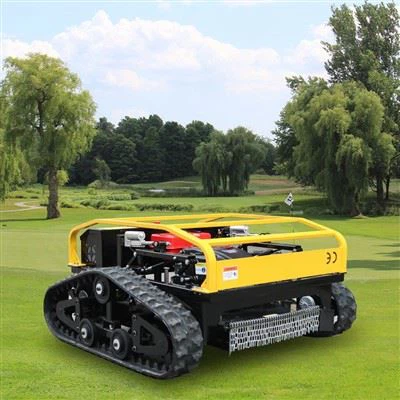
Hey there! As a supplier of remote mowers, I often get asked about the maximum operating time of a remote mower per day. It's a great question, and one that depends on a few different factors. In this blog post, I'll break down those factors and give you a better idea of how long you can expect your remote mower to run each day.
First off, let's talk about the types of remote mowers we offer. We've got a range of options, including the Remote Control Mower, the Self Propelled Garden Remote Control Lawn Mower, and the Remote Control Flail Mower. Each of these mowers has its own unique features and capabilities, which can affect its operating time.
One of the biggest factors that determines how long a remote mower can run is its power source. Most of our remote mowers are powered by either batteries or gasoline. Battery-powered mowers are generally more eco-friendly and quieter, but they tend to have a shorter operating time compared to gasoline-powered ones.
Battery-powered remote mowers typically have an operating time of anywhere from 30 minutes to a few hours, depending on the battery capacity and the mower's power consumption. For example, a smaller, less powerful battery-powered mower might be able to run for about 30 minutes on a single charge, while a larger, more advanced model could last up to 2 - 3 hours. The advantage of battery-powered mowers is that they're easy to recharge, and you don't have to deal with the hassle of refueling with gasoline.
On the other hand, gasoline-powered remote mowers can run for much longer periods. A typical gasoline-powered mower can operate for 4 - 8 hours on a single tank of gas. This makes them a great choice for large lawns or commercial applications where you need to cover a lot of ground in one go. However, they do require regular maintenance, such as oil changes and spark plug replacements, and they produce emissions, which might not be ideal for some users.
Another factor that affects the operating time is the terrain and the type of grass being mowed. If you're using the mower on a flat, even surface with short, thin grass, it won't have to work as hard, and it can run for a longer time. But if you're dealing with hilly terrain, thick grass, or a lot of obstacles, the mower will have to use more power to cut through the grass, which will reduce its operating time.
For instance, if you're using a remote mower to mow a golf course fairway, which is usually flat and well - maintained, the mower can run for a relatively long time. But if you're using it to clear a field with tall, thick weeds, you might notice that the mower's battery drains faster or it uses up more gasoline.


The mower's cutting width also plays a role. A wider cutting width means the mower can cover more ground in less time, but it also requires more power. So, if you have a mower with a large cutting width, it might not be able to run as long as a mower with a smaller cutting width, especially if the grass is thick.
Let's say you have a 20 - inch cutting width mower and a 30 - inch cutting width mower. The 30 - inch mower will be able to mow a larger area in one pass, but it will also draw more power from the battery or burn more gasoline, which will reduce its overall operating time.
Now, let's talk about how you can maximize the operating time of your remote mower. First of all, make sure you're using the right mower for the job. If you have a small lawn, a battery - powered mower with a smaller cutting width might be sufficient, and it will save you the hassle of dealing with gasoline. But if you have a large commercial property, a gasoline - powered mower with a wide cutting width is probably your best bet.
Regular maintenance is also crucial. Keep the mower's blades sharp, as dull blades will make the mower work harder and use more power. Check the air filter on gasoline - powered mowers regularly and replace it when necessary. For battery - powered mowers, make sure you're charging the battery correctly and storing it in a cool, dry place.
If you're using a battery - powered mower, consider having an extra battery on hand. That way, when one battery runs out, you can quickly swap it out and keep mowing without having to wait for the battery to recharge.
In general, if you're using a battery - powered remote mower for light residential use on a small to medium - sized lawn, you can expect it to run for about 1 - 2 hours per day. For gasoline - powered mowers used in commercial settings or for large lawns, they can easily run for 4 - 6 hours or more per day, as long as you keep them properly maintained and refueled.
So, to sum it up, there's no one - size - fits - all answer to the question of the maximum operating time of a remote mower per day. It depends on the power source, the terrain, the type of grass, the cutting width, and how well you maintain the mower.
If you're in the market for a remote mower and want to know more about which model would be best for your needs and how long it can run, don't hesitate to reach out. We're here to help you make the right choice and ensure that you get the most out of your remote mower. Whether you're a homeowner looking to keep your lawn in top shape or a commercial landscaper, we've got the perfect remote mower for you.
If you have any questions about our Remote Control Mower, Self Propelled Garden Remote Control Lawn Mower, or Remote Control Flail Mower, or if you're interested in purchasing one, just get in touch with us. We'll be happy to have a chat with you and discuss your requirements.
References:
- General knowledge about lawn mower technology and operation
- Manufacturer's specifications for remote mowers