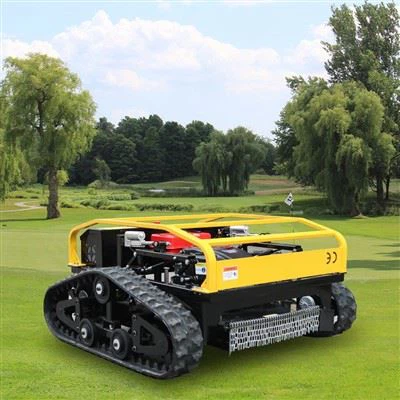
Hey there, lawn enthusiasts! As a supplier of top - notch 4wd Lawn Mowers, I've had my fair share of questions about how the 4wd system engages on these machines. So, I thought I'd break it down for you in this blog post.
First off, let's talk about why 4wd is a big deal in lawn mowers. You see, a 4wd lawn mower gives you better traction and control, especially when you're dealing with uneven terrain, wet grass, or slopes. It's like having an extra set of helping hands to keep your mower moving smoothly and efficiently.
So, how does the 4wd system engage? Well, it all starts with the design of the mower itself. Most modern 4wd lawn mowers come with a simple yet effective engagement mechanism. There are typically two main types of 4wd engagement systems: manual and automatic.
Manual Engagement
Let's start with the manual system. In a manual 4wd lawn mower, you, as the operator, have full control over when to engage the 4wd. Usually, there's a lever or a switch located somewhere on the mower's control panel. When you're approaching a tough area, like a steep hill or a patch of thick, wet grass, you simply flip that switch or move the lever.
Once you engage the 4wd manually, the mower's transmission system kicks into action. The power from the engine is then distributed to all four wheels. This is done through a series of gears and shafts. The transmission redirects the power flow, ensuring that each wheel gets an appropriate amount of torque. It's like giving your mower a power boost right when it needs it the most.
One of the advantages of a manual 4wd system is that you have complete control. You can decide exactly when to use the extra traction, which can save fuel in the long run. However, it does require a bit more attention from you as the operator. You need to be aware of the terrain and know when to engage and disengage the 4wd.
Automatic Engagement
Now, let's move on to the automatic 4wd system. This is a real game - changer for many users. In an automatic 4wd lawn mower, the system senses when extra traction is needed. It uses sensors placed at various points on the mower, such as near the wheels and the transmission.
These sensors constantly monitor factors like wheel speed, traction, and the load on the mower. When the sensors detect that one or more wheels are starting to slip, the 4wd system engages automatically. For example, if you're mowing on a wet surface and one of the wheels loses grip, the sensors will pick up the change in wheel speed. The system then quickly distributes power to all four wheels to regain traction.
The beauty of the automatic system is that it takes the guesswork out of the equation. You can focus on mowing your lawn without having to worry about when to engage the 4wd. It provides a seamless and hassle - free experience, especially for those who are new to using 4wd lawn mowers.
Components of the 4wd System
To understand how the 4wd system engages, it's also important to know about its key components. The heart of the 4wd system is the transfer case. This is a special gearbox that sits between the engine and the wheels. Its main job is to split the power from the engine and send it to both the front and rear axles.
When you engage the 4wd, the transfer case shifts into a different gear ratio. This allows it to distribute power more evenly between the front and rear wheels. It's a crucial part of the system, as it ensures that all four wheels work together in harmony.
Another important component is the differential. The differential allows the wheels on the same axle to rotate at different speeds. This is essential when you're turning, as the outer wheels need to cover more distance than the inner wheels. In a 4wd lawn mower, there are usually both front and rear differentials, which work together to provide smooth and stable operation.
Maintenance and Care
Proper maintenance is key to ensuring that your 4wd system engages smoothly every time. You should regularly check the fluid levels in the transfer case and differentials. Low fluid levels can cause the gears to wear out faster and may lead to problems with the 4wd engagement.
It's also a good idea to inspect the drive shafts and axles for any signs of damage or wear. If you notice any leaks, strange noises, or vibrations when the 4wd is engaged, it's best to have your mower checked by a professional.
Benefits of a 4wd Lawn Mower
Using a 4wd Lawn Mower has numerous benefits. As I mentioned earlier, the improved traction is a major plus. It allows you to mow areas that a 2wd mower might struggle with. You can tackle slopes with confidence, knowing that your mower won't slip or lose control.
In addition, a 4wd lawn mower can save you time. With better traction, you can mow more efficiently, especially in large or challenging lawns. You won't have to go over the same areas multiple times to get a clean cut.
Remote - Controlled 4wd Lawn Mowers
If you're looking for even more convenience, you might want to consider a Remote Lawn Mower. These mowers combine the power of 4wd with the ease of remote control. You can sit back and operate the mower from a distance, which is great if you have a large or hard - to - reach lawn.
The 4wd system on remote - controlled lawn mowers works in the same way as on traditional ones. Whether it's a manual or automatic engagement, the mower will still provide the extra traction you need. And with remote control, you can easily navigate around obstacles and get into tight spaces.


Conclusion
So, there you have it! That's how the 4wd system engages on a lawn mower. Whether you choose a manual or automatic system, a 4wd lawn mower is a great investment for anyone who wants to make their lawn - mowing experience easier and more efficient.
If you're interested in purchasing a 4wd lawn mower or have any questions about our products, feel free to reach out. We're here to help you find the perfect mower for your needs. Let's get your lawn looking its best!
References
- Lawn Mower Technology Handbook
- Agricultural Machinery Maintenance Guide